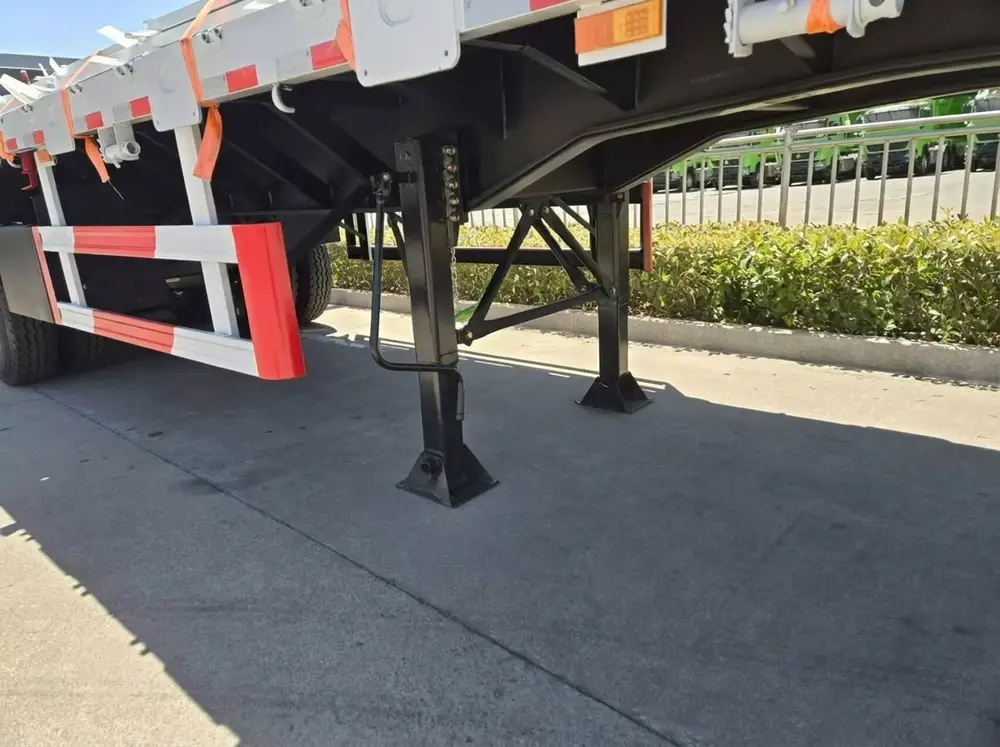
Common Faults and Solutions of Trailer Air Suspension Airbag
Published Apr 4, 2026
25 engineers · ISO 9001 · 3C certified · Liangshan factory since 2001
Updated 2026-05-11
8 min read
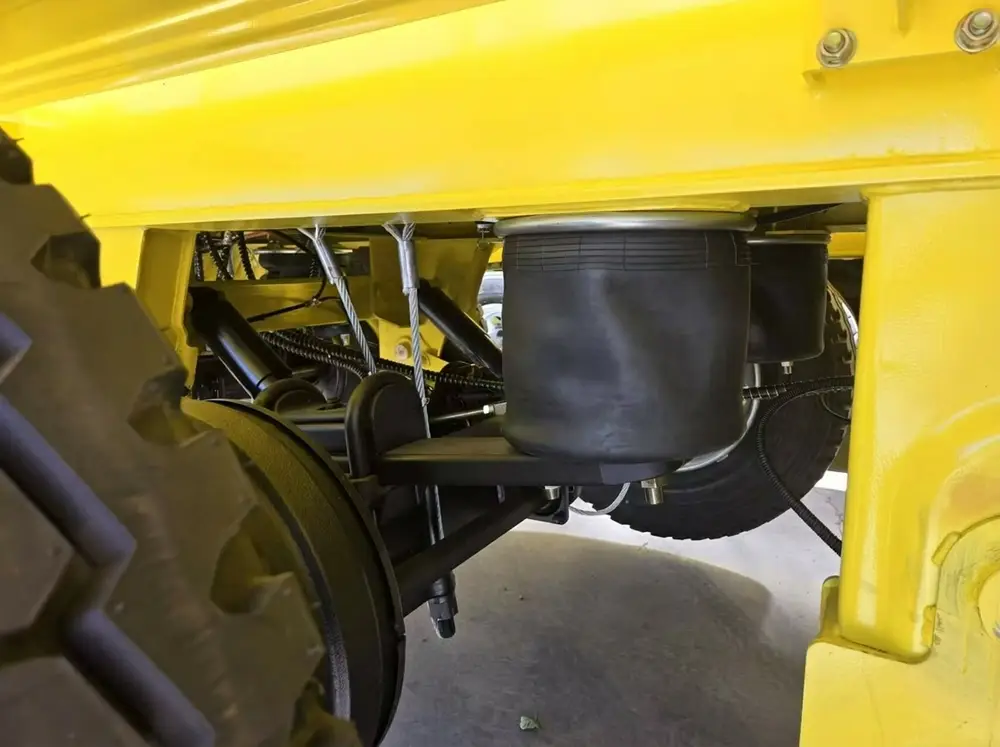
Air suspension has been around since the mid-19th century, evolving from basic pneumatic springs through composite airbag setups and semi-active systems before trucks and trailers adopted it widely in the 1950s. Today it's the go-to choice for highway operators hauling fragile or damage-sensitive cargo — which is why we covered it as a key decision point in our trailer buying guide.
That said, air suspension adds complexity that mechanical leaf springs simply don't have. Our after-sales team fields air suspension questions almost every week, and the issues nearly always fall into one of two categories: airbag wrinkling or low/no air pressure in the airbag. The causes differ, and so do the fixes. Here's what to look for and how to handle each.
How the Air Suspension System Works
Before jumping into faults, it helps to understand the air flow path — because most diagnosis is just tracing where the air stops.
The compressed air supply comes from the tractor's brake system. It feeds through a pressure protection valve into the suspension's own dedicated air reservoir. From there, air passes through a filter to the leveling valve (also called a height control valve), which distributes air to the left and right airbags based on the trailer's ride height.
Key components in the chain:
| Component | What it does | Where it fails |
|---|---|---|
| Pressure protection valve | Isolates suspension air from brake air when pressure drops below ~6 bar (85 psi) | Rarely fails, but trips by design when system pressure is low |
| Dedicated air reservoir | Stores air exclusively for the suspension | Leaks at fittings or drain valve |
| Air filter | Keeps moisture and debris out of the leveling valve | Clogs over time, restricting flow |
| Leveling valve | Senses ride height via a control rod and adds or releases air | Rod disconnects, internal seals wear out |
| Airbags (left and right) | Support the trailer load on a cushion of air | Wrinkle, crack, or lose air at seam |
When something goes wrong, the problem is almost always at one of these five points. Let's look at the two most common failures.
Airbag Wrinkles
A wrinkled airbag looks like exactly what it sounds like — the rubber bellows fold in on themselves instead of inflating into a smooth, rounded shape. The airbag still holds air, but it's not supporting the load evenly. Left uncorrected, the folds create stress points that accelerate rubber fatigue and shorten the airbag's service life.
What Causes It
Overextension during loading or transport. This is the most common trigger. When a trailer is hoisted onto a ship or lifted for container loading, the suspension drops to full extension. The airbag stretches further than its normal travel range. If it doesn't retract cleanly when the trailer is set back down, the rubber folds inward and stays wrinkled.
Steep ramps and dock approaches. Driving into a maintenance pit, crossing a steep loading platform, or entering a workshop on a sharp incline can stretch individual airbags past their designed range — especially on one side. We see this a lot with operators who frequently move trailers through container yards with uneven surfaces.
How to Fix It
The repair is straightforward and doesn't require parts:
- Locate the rubber connector underneath the leveling valve.
- Disconnect it to bypass the valve's automatic height control.
- Manually lift the leveling valve's control rod upward and hold it.
- Wait until all airbags inflate fully — you'll see the wrinkles push out as the bags reach full pressure.
- Reinstall the control rod in its normal position and reconnect the rubber connector.
The airbags should now sit at the correct shape and ride height.
If wrinkles keep coming back during normal driving, the airbag is traveling beyond its intended range on a regular basis. This usually means the suspension lacks a travel limiter. Installing a bump stop or travel-limiting strap between the axle and the frame prevents the airbag from overextending on rough roads or during aggressive loading. Most air suspension kits include these from the factory, but they can break or go missing after years of service. Check that yours are present and intact.
Low or No Air in the Airbag
This is the more serious of the two failures. When an airbag runs low on air — or goes flat — the trailer drops on one side or sits unevenly. The frame rests on the bump stops, ride quality disappears, and continued driving in this state damages the axle, tires, and frame brackets. On a loaded trailer, a flat airbag also shifts load distribution to the remaining bags, which can push them beyond their rated capacity.
What Causes It
There are four common causes, listed from most to least frequent based on what our service team sees in the field:
1. Low system air pressure. The pressure protection valve is designed to cut off air supply to the suspension when the trailer's overall air pressure falls below approximately 6 bar (85 psi). This is a safety feature — the brakes get priority. If the tractor's compressor isn't keeping up, or if there's a leak somewhere in the brake system, the suspension is the first thing to lose pressure. The airbags aren't broken; they're just not getting any air.
2. Blocked or kinked air line. The airlines that run from the reservoir to the leveling valve and from the valve to the airbags are typically nylon tubing. A sharp bend, a crushed section from road debris, or a fitting that's worked loose will restrict or stop air flow entirely. This is especially common on trailers that run on unpaved roads — kicked-up stones can dent or crimp exposed tubing.
3. Disconnected leveling valve rod. The control rod connects the axle to the leveling valve. It's what tells the valve whether the trailer is sitting too high, too low, or at the correct height. If this rod falls off — a loose cotter pin, a worn ball joint, a broken clip — the valve can't sense ride height and stops supplying air. The rod itself is a simple mechanical linkage, but it's exposed to road spray, mud, and vibration, all of which work to loosen its connections over time.
4. Damaged leveling valve. If the air supply is good, the lines are clear, and the rod is connected, the leveling valve itself is likely the problem. Internal rubber seals degrade after years of service, especially in dusty or humid environments. A valve that can't hold its internal seals will either leak air continuously or fail to open when the rod signals for more pressure.
How to Fix It
Trace the air flow path from source to destination. Start upstream and work your way down:
- Check the air reservoir gauge. Is the main system building adequate pressure? If it's below 6 bar, the protection valve has cut off supply — fix the compressor or brake system leak first.
- Inspect every air line. Walk the full run from reservoir to valve to airbags. Look for kinks, cracks, crushed sections, and loose push-in fittings. A soap-and-water spray on each connection will bubble at any leak.
- Check the leveling valve rod. Is it attached at both ends? Does the ball joint move freely? Replace worn clips or cotter pins. This is the cheapest and most common fix.
- Test the leveling valve. With adequate air supply, manually move the control rod up and down. You should hear air flowing to or exhausting from the airbags. No response means the valve's internal seals have failed and the unit needs replacement.
Most of these fixes take under an hour with basic hand tools. The leveling valve itself costs $30–$80 depending on the brand, and a full airbag replacement runs $80–$200 per bag. Neither part is expensive — the real cost is the downtime if the problem isn't caught early.
Preventive Maintenance for Air Suspension
The best way to deal with airbag failures is to prevent them. If you're already following a regular trailer maintenance schedule, add these air suspension checks to your routine:
Weekly:
- Walk around the trailer and visually confirm all airbags are inflated evenly
- Check that ride height looks level side-to-side
Monthly:
- Inspect the leveling valve rod attachment points for wear
- Check air lines for chafing where they pass through frame brackets
- Drain the suspension air reservoir to remove accumulated moisture
Annually (or every 50,000 km):
- Replace the air filter upstream of the leveling valve
- Inspect airbag rubber for cracking, especially at the crimped ends
- Test all fittings with soapy water for slow leaks
- Verify bump stops and travel limiters are present and intact
Air suspension adds a few steps to your maintenance checklist, but it pays back in cargo protection and ride quality — especially on highway routes where fragile goods are on the line. Catch problems early and you'll get years of reliable service from the system.