
How to Choose the Right Semi Trailer for Your Business
Published Mar 10, 2026
25 engineers · ISO 9001 · 3C certified · Liangshan factory since 2001
Updated 2026-06-11
7 min read
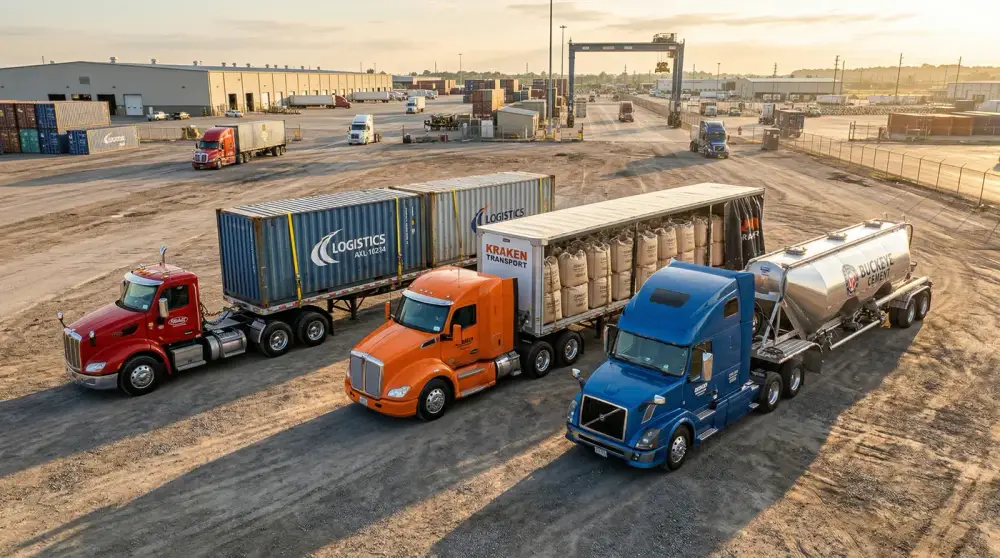
Every week, we talk with fleet operators who are about to spend $10,000–$30,000 on a trailer and aren't sure what to buy. The answer always starts with the same question: what are you hauling?
Get the trailer type wrong, and you're stuck with a vehicle that sits idle half the time. Get the specs wrong, and you're burning fuel carrying steel you don't need — or worse, overloading a frame that wasn't built for the weight.
Here's how to work through the decision, based on what we've learned from 25 years of building trailers for operators across Africa, Southeast Asia, and the Middle East.
Match the Trailer Type to Your Cargo
This is the first fork in the road, and it eliminates most of the catalog immediately.
Hauling shipping containers? You need a flatbed trailer. Open deck, twist locks for container securing, and loading access from all sides for cranes and reach stackers. A 3-axle flatbed with 12 twist locks handles both 20ft and 40ft boxes. If your routes include oversized cargo alongside containers, look at extendable flatbed models — the extra deck length pays off when you're carrying wind turbine blades or long steel beams between container jobs.
Hauling bulk goods — rice, cement bags, aggregate, sand? A side wall trailer with removable panels gives you the most flexibility. Walls up for loose cargo, walls off for container work. We've seen operators in the Philippines and West Africa run a single side wall fleet for mixed freight rather than maintaining separate flatbed and box trailers. That's fewer idle vehicles and simpler fleet management.
Hauling dry powder — cement, fly ash, lime? There's no substitute for a bulk cement tanker. The V-shaped tank with pneumatic discharge gives you dust-free loading and complete material discharge. Open-top transport loses 3–5% of powder to wind on every trip, and that adds up fast when you're running 30 loads per month. Cement plant operators running enclosed tankers see direct cost savings in material recovery alone.
Hauling livestock or agricultural products? A fence trailer keeps animals secure while allowing airflow — critical for long-haul live transport. For heavy livestock runs, 4-axle fence models with 80-ton capacity handle cattle loads that would overload a standard 3-axle.
Hauling heavy machinery, excavators, or construction equipment? Look at low bed trailers. The lowered deck keeps the center of gravity down and provides the ramp access needed for tracked and wheeled equipment. For anything over 80 tons — mining equipment, large cranes — you'll need a 4-axle 100-ton configuration or a detachable gooseneck.
Get the Payload Right — Don't Overspec
We see buyers make two mistakes with equal frequency: buying a 40-ton trailer for 60-ton loads, and buying a 60-ton trailer for 30-ton loads.
Overloading shortens the trailer's life and creates legal liability. But overspeccing wastes money twice — once at purchase (4-axle trailers cost 20–30% more than 3-axle) and again on every trip through higher fuel consumption from hauling unnecessary steel.
Here's how to size it correctly:
- Check your local road regulations first. Axle load limits vary by country. In many African and Southeast Asian markets, the effective limit is 13 tons per axle, which puts a 3-axle trailer at roughly 39 tons before the tractor's contribution.
- Calculate your typical load, not your maximum. If 80% of your trips carry 35–40 tons and only occasional loads hit 55 tons, a 3-axle 60T trailer covers both scenarios without the cost of a 4-axle.
- Factor in cargo density. Light, bulky cargo (foam, empty containers) fills the deck before hitting the weight limit. Dense cargo (steel coils, cement bags) hits the weight limit before filling the deck. If you're weight-limited, you don't need a longer trailer.
For general freight operations, a 3-axle configuration at 50–60 tons handles the vast majority of work across our customer base. Four-axle setups exist for specific heavy-haul applications — not as a default choice.
Suspension: Leaf Springs vs. Air — It Depends on Your Roads
Mechanical suspension with leaf springs is what 90% of our export customers choose, and for good reason. It handles poor road surfaces without complaint, costs less to maintain, and any roadside mechanic can replace a leaf spring with basic tools. For operations in sub-Saharan Africa, Central Asia, or anywhere with mixed road quality, mechanical suspension is the practical choice.
Air suspension protects fragile cargo better and lets you adjust ride height for dock loading. But it costs more upfront, requires a functioning air supply system, and needs specialized repair when something fails. We recommend air suspension only for operators running on well-maintained highways carrying damage-sensitive cargo — like electronics or glass — and who have access to service facilities.
Axle Brand Matters More Than You Think
The axle is the one component your mechanic will interact with most over the trailer's life. Choosing a brand without local parts availability is asking for trouble.
FUWA axles are the most widely stocked across Africa, Southeast Asia, and the Middle East. We fit them on roughly 60% of our export orders because our customers can find replacement hubs, bearings, and brake drums in local markets without waiting for international shipping.
BPW axles carry a premium price and deliver excellent performance, particularly on highway applications. If your operation runs long-haul routes in better-maintained road networks, BPW is worth the investment.
For landing gear and king pins, JOST is our default recommendation. Their parts distribution network reaches most of our target markets, and the product reliability is consistent across the line.
Think in Cost Per Kilometer, Not Purchase Price
A $9,500 trailer and a $12,000 trailer carrying the same cargo over the same route will have very different 5-year costs. The cheaper trailer might use heavier steel, burning more fuel per trip. It might use a no-name axle brand, forcing you to wait two weeks for replacement parts while the trailer sits idle.
Before you sign a purchase order, calculate:
- Fuel cost per trip based on the trailer's tare weight and your route distance
- Expected tire replacement frequency — tire costs often exceed $300/tire in import markets
- Parts availability — a day of downtime waiting for parts costs more than the savings on a cheaper component
- Resale value — trailers with recognized component brands (FUWA, BPW, JOST) hold value better in secondary markets
The right trailer for your business is the one that delivers the lowest total cost per ton-kilometer over its working life. That's rarely the one with the lowest price tag.
Work with a Manufacturer That Builds to Your Specs
Standard catalog trailers work fine for standard jobs. But most transport operations have at least one requirement that doesn't fit the standard — longer deck, higher walls, different axle spacing, specific tie-down configurations, or regional compliance requirements.
A manufacturer that customizes to order can adjust dimensions, swap component brands, modify suspension setups, and change wall heights without charging engineering fees on top. Ask for engineering drawings before placing the order, and confirm that the factory can accommodate your modifications within a reasonable production timeline.
At HUAYU, our standard production lead time is 20–30 days for single units and 30–60 days for fleet orders of 20+ units. We produce all major trailer types across 10 production lines in our Liangshan factory, which means we can usually accommodate custom specifications without extending the delivery schedule.
Continue Reading
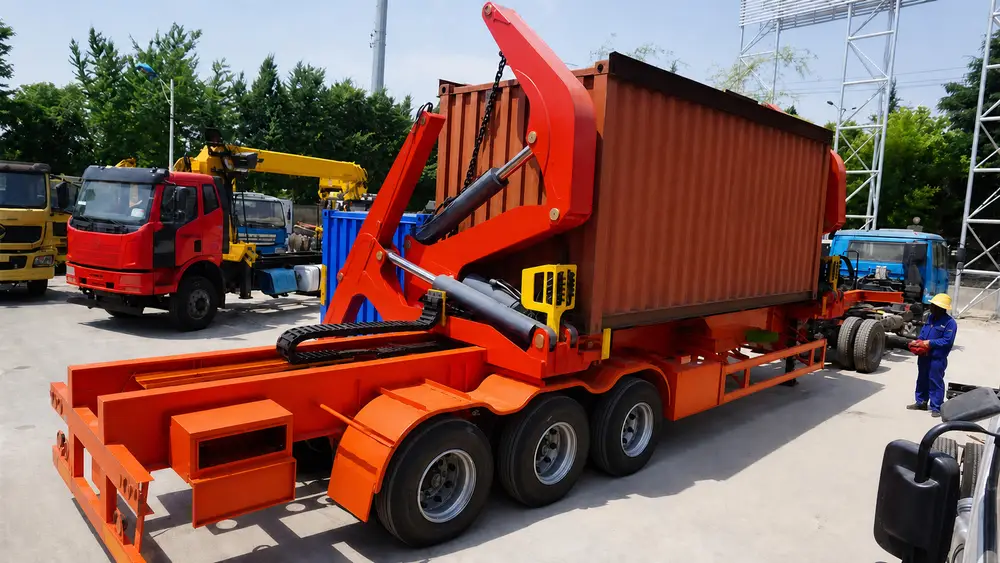
Aug 28, 2026
What Is a Side Loader Trailer? Container Side Lifter Design & Specs
What a side loader trailer (container side lifter) is, how it works, main types, design features, full specs, benefits, applications, and buyer answers.
Apr 9, 2026
What Is an RGN Trailer? How Is It Different from a Low Bed Trailer?
Learn the key differences between RGN (removable gooseneck) trailers and lowboy trailers — specs, capacity, cost, stability, and front-loading vs rear-loading.
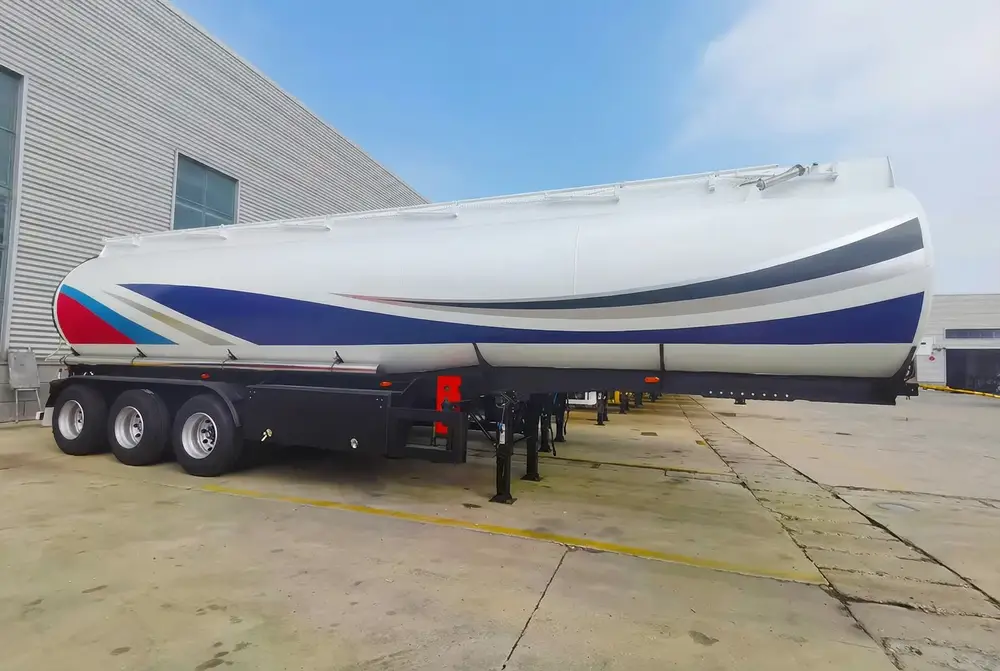
Apr 4, 2026
How to Buy a Fuel Tank Trailer?
Practical guide to buying a fuel tank trailer: materials (carbon steel vs aluminum vs stainless steel), tank shapes, loading systems, safety equipment, and real pricing.