
How to Choose a Reliable Semi Trailer Manufacturer
Published Apr 4, 2026
25 engineers · ISO 9001 · 3C certified · Liangshan factory since 2001
Updated 2026-05-11
11 min read
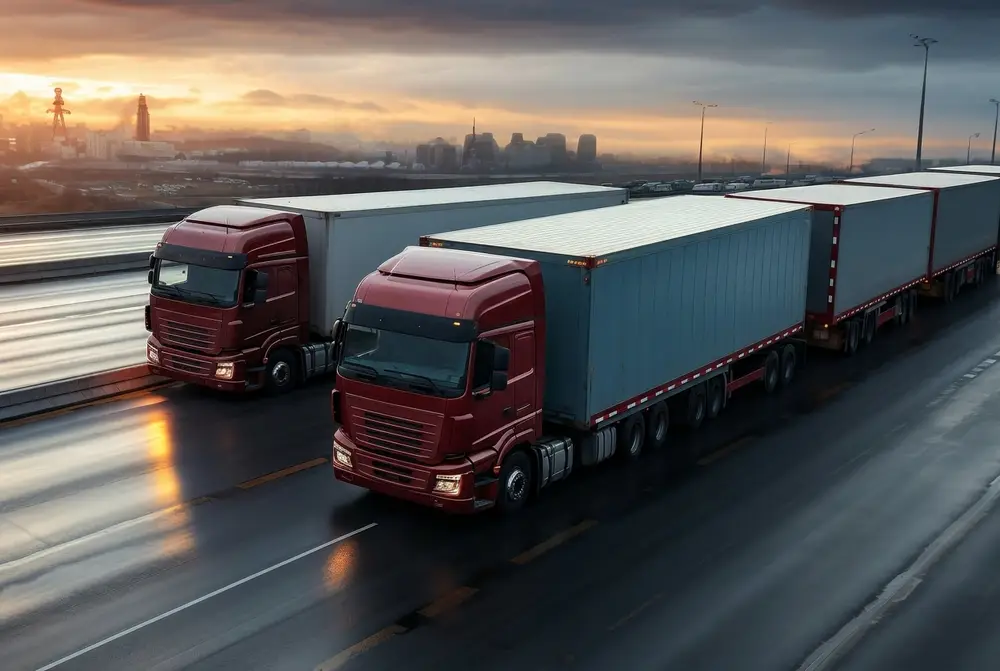
Every year, thousands of fleet operators and transport companies import semi trailers from China. The math works: Chinese manufacturers produce more semi trailers than any other country, and factory-direct pricing undercuts domestic suppliers in most import markets by 30-50%. But China has roughly 800 registered semi trailer factories, and about 90% of them are small operations running on less than $3 million in working capital. Some build solid equipment. Many do not.
We've been on the manufacturing side since 2001, and we've watched buyers make the same expensive mistakes over and over. They chase the lowest quote, skip due diligence, and six months later they're staring at a cracked main beam or dealing with imitation axles that no local dealer will touch. The difference between a good semi trailer manufacturer and a bad one never shows up in WhatsApp photos. It shows up 10,000 km into the trailer's working life.
This guide covers what to actually evaluate when choosing a trailer factory in China, whether you're buying a single flatbed trailer or placing a fleet order for 50 mixed units.
Check the Factory's Scale and Purchasing Power
A semi trailer manufacturer's size directly affects what goes into your trailer. Not because bigger is automatically better, but because of procurement economics.
A factory purchasing 100,000+ tons of steel per order works directly with China's top steel mills. They get consistent grade quality across Q235, Q345, T700L, and NM450 plates because the mill prioritizes their orders. A small factory buying 500 tons at a time gets whatever's available from a distributor, and material certificates may or may not match what's actually in the stack.
Components follow the same pattern. When a manufacturer orders 2,000+ axle sets from FUWA or BPW at a time, they get factory-direct pricing, dedicated quality control, and priority warranty support. A small shop ordering 20 sets gets dealer pricing and whatever brand is cheapest that month.
What to ask:
- What is your annual production volume in units?
- Which steel mills supply your plate, and can you provide mill certificates for a recent order?
- What axle and landing gear brands do you stock, and what's your order volume with each supplier?
- Can I see your component warehouse?
If the factory can't name their steel supplier, or if the "BPW axles" in their product photos don't have BPW branding on the hub caps, walk away. Counterfeit components are a well-known practice across the Chinese trailer industry. The savings disappear the first time a bearing seizes on a highway in Tanzania or the Philippines.
Verify In-House Engineering and Design Capability
Most small factories fall short here, and the consequences hit international buyers hardest.
A trailer designed for Chinese domestic roads won't survive a year on unpaved mining hauls in West Africa or overloaded cement runs through Central Asia. The roads are different. The load patterns are different. The climate is different. A semi trailer manufacturer with a real engineering team adjusts the vehicle design for the destination market: steel type and thickness, axle load rating, suspension configuration, frame reinforcement, even the paint specification for coastal versus inland operation.
At our factory, engineers start every export order by reviewing the customer's operating conditions. Target country road regulations, typical load weights, climate (coastal humidity versus dry continental heat), the specific cargo type. A fuel tanker trailer heading to Nigeria gets a different wall thickness and corrosion protection spec than one running domestic routes in Shandong. A low bed trailer built for 100-ton excavator transport in Kazakhstan gets heavier cross-members and a different suspension setup than a 60-ton model for road construction equipment.
Ask for engineering drawings before you place the order. Ask how many in-house engineers they employ. Ask to see examples of market-specific modifications they've made for other export customers.
A factory that only offers fixed catalog models with no customization is probably copying existing designs rather than engineering them. That means nobody at the factory actually understands why the frame is dimensioned the way it is, and they can't adjust it intelligently when your operating conditions differ from the original.
Evaluate the Quality Inspection Process
Quality control separates professional manufacturers from assembly shops. Not whether they inspect, but how systematic the process is and what authority the QC team has to reject work.
A serious semi trailer manufacturer runs inspections at multiple stages: incoming material verification (steel thickness, grade certificates), in-process checks (weld penetration, dimensional accuracy at each assembly station), and final pre-shipment inspection covering 50+ checkpoints before the trailer loads for port.
Our QC department runs 20 full-time inspectors across the production floor. They check every trailer, not a sample, against the engineering specifications. Different trailer types get model-specific tests on top of the standard checklist:
- Fuel tanker trailers -- air tightness testing at specified pressure
- Bulk cement trailers -- weld seam inspection on the pressure vessel
- Flatbed trailers and low bed trailers -- loading capacity verification
- Curtain side and container trailers -- rain and leakage prevention testing
- Tipper trailers -- hydraulic lift cycle testing under rated load
Our first-pass rejection rate runs around 8-10%. That means roughly 1 in 10 trailers gets sent back to a production station for correction before clearing final QC. A number like that tells you the system is actually catching problems rather than rubber-stamping output.
Red flag: If the QC team reports to the production manager, there's a built-in conflict of interest. The person responsible for hitting output targets also decides whether to ship a borderline trailer. Independent QC that reports directly to senior management is the structure that actually works.
Examine Export Experience and Documentation
Buying from a factory that only sells domestically creates problems that have nothing to do with trailer quality. Export documentation, container loading procedures, port logistics, compliance with destination-country import regulations -- these are all specialized knowledge. A factory doing its first international shipment will make mistakes that cost you time and money at customs.
At HUAYU, we ship from Qingdao port and handle all export documentation in-house: commercial invoice, packing list, Bill of Lading, certificate of origin, and technical certificates for the trailers. We've exported to markets across Africa, Southeast Asia, Central Asia, the Middle East, and South America. That accumulated experience means our team knows the specific documentation requirements for most destination countries before the order starts.
Some things worth asking any factory:
- How many trailers did you export last year, and to which countries?
- Do you handle Bill of Lading, packing lists, certificates of origin, and customs clearance, or do I need a trading company?
- What port do you ship from, and what's the logistics process from factory to port?
- Can you provide references from buyers in my region?
Watch out for any factory that wants you to work through a trading company. That adds a middleman markup (typically 5-15%) without adding quality control. Trading companies don't inspect production. They broker the transaction and handle paperwork. If you're buying directly from a factory, the factory should handle documentation directly.
Assess After-Sales Support and Parts Availability
The real test of a semi trailer manufacturer starts after delivery. A trailer running 200,000 km per year in Nigeria or Indonesia will need replacement brake linings, landing gear components, tire bolts, and eventually suspension parts. Whether your manufacturer can support you when that happens makes or breaks the relationship.
The component brands fitted to your trailer determine local parts availability more than anything else. A trailer equipped with FUWA axles, JOST landing gear, and Triangle tires has replacement parts stocked across Africa, Southeast Asia, and the Middle East. A trailer with no-name Chinese components forces you to order parts from the original factory, adding 3-4 weeks of lead time and international shipping costs every time something wears out.
We default to brand-name components on export orders for exactly this reason. The purchase price is higher, roughly $2,000-3,000 more per trailer, but the total cost of ownership over a 5-8 year service life is lower because parts are locally available and the components last longer.
Before you commit to a manufacturer, confirm: Do they stock common wear parts for export shipment? What's their lead time for shipping replacement parts internationally? How do they handle warranty claims for overseas customers?
Visit the Factory (or Request a Structured Virtual Tour)
Nothing replaces walking the production floor. Factory visits reveal things that no brochure, website, or WhatsApp video can show you.
What to look for during a visit:
- Welding quality on work-in-progress trailers -- consistent bead width, no visible porosity or undercut, proper shielding gas coverage. If the welds on the production floor look rough, the finished trailer was just ground smooth and painted over
- Component storage -- branded axles and landing gear should be stored in original packaging with supplier labels. A pile of unboxed, unlabeled axles is a warning sign
- Steel plate handling -- raw steel should be stored under cover and marked with grade identification. Plates sitting outside in rain will have surface contamination that compromises paint adhesion
- Workshop organization -- a clean, organized production floor with clearly marked stations indicates systematic processes. A chaotic floor with trailers at random stages of assembly scattered everywhere indicates the opposite
- The QC station -- look for documented checklists, calibrated measuring tools, and a clear reject/rework area
Can't visit in person? Ask for a live video tour, not pre-recorded marketing footage. Have the factory show specific areas: the steel warehouse, a welding station mid-operation, the paint line, the QC inspection area, and a few completed trailers ready for shipment. Any manufacturer confident in their operation will show you anything you ask to see.
We host factory visits regularly at our Liangshan facility. It's one of the first things we suggest to buyers evaluating our operation, because the production floor is where claims about quality either hold up or don't.
Compare Total Cost, Not Just the Quote Price
The cheapest quote from a trailer factory in China usually comes with the thinnest steel, the lightest frame, and no-name components. That $8,500 side wall trailer looks like a deal until you're replacing cracked cross-members at month 14 and paying $800 per axle bearing set from an overseas supplier because nobody in your country stocks the brand.
Calculate what actually matters:
- Tare weight -- a heavier trailer burns more fuel on every trip and carries less payload. Compare tare weights across quotes for the same capacity rating
- Component brands -- a trailer with FUWA axles and JOST legs costs more upfront but saves money every time you need parts
- Steel specification -- Q345B main beams versus Q235 means higher yield strength and a longer structural life under heavy loads
- Paint and corrosion protection -- zinc-rich primer costs $200-400 more per trailer. It adds 3-5 years of frame life in humid or coastal environments
- Warranty terms -- what does the warranty actually cover, and how are overseas claims processed?
A $12,000 trailer that runs 8 years without structural issues costs $1,500 per year. A $9,000 trailer that needs major repairs at year 3 and replacement at year 5 costs $1,800 per year, plus the revenue you lost during downtime. Every experienced fleet operator we work with has learned this lesson. Usually the hard way.
Making Your Decision
Choosing a semi trailer manufacturer comes down to five questions, answered with verified evidence rather than marketing claims:
- Does the factory have the scale to source quality materials? Check annual output, steel procurement volumes, and component supplier relationships.
- Can they engineer the trailer for your specific market? Request drawings and ask about past modifications for your region.
- Is their QC process systematic and independent? Ask for rejection rates, inspection protocols, and test certificates.
- Do they have real export experience to your region? Verify documentation capability and ask for buyer references.
- Will they support you after delivery? Confirm parts availability, warranty process, and component brand accessibility in your operating area.
Any manufacturer worth buying from can answer all five with specifics. Vague responses or promises without documentation mean you should keep looking.
We build over 20 trailer models, from flatbed trailers and fuel tanker trailers to bulk cement trailers, tipper trailers, and low bed trailers, across 10 production lines in our Liangshan factory. If you're evaluating manufacturers for your next purchase, reach out to our team with your specifications. We'll send engineering drawings, a detailed quote, and arrange a factory visit or live video tour so you can evaluate the operation firsthand. You can also browse the full product catalog to see what we build.
Continue Reading
Aug 28, 2026
What Is a Side Loader Trailer? Container Side Lifter Design & Specs
What a side loader trailer (container side lifter) is, how it works, main types, design features, full specs, benefits, applications, and buyer answers.
Apr 9, 2026
What Is an RGN Trailer? How Is It Different from a Low Bed Trailer?
Learn the key differences between RGN (removable gooseneck) trailers and lowboy trailers — specs, capacity, cost, stability, and front-loading vs rear-loading.
Apr 4, 2026
How to Buy a Fuel Tank Trailer?
Practical guide to buying a fuel tank trailer: materials (carbon steel vs aluminum vs stainless steel), tank shapes, loading systems, safety equipment, and real pricing.