20 Units Side Wall Trailers Shipped to Philippines
25 engineers · ISO 9001 · 3C certified · Liangshan factory since 2001
Updated 2026-03-30
Island Logistics Demands Flexibility
Fleet operators in the Philippines face a problem that mainland transport companies don't: every trailer has to earn its keep across a mix of cargo types, because you can't afford to park a specialized vehicle waiting for the right load when freight moves between islands on ferries and schedules shift daily.
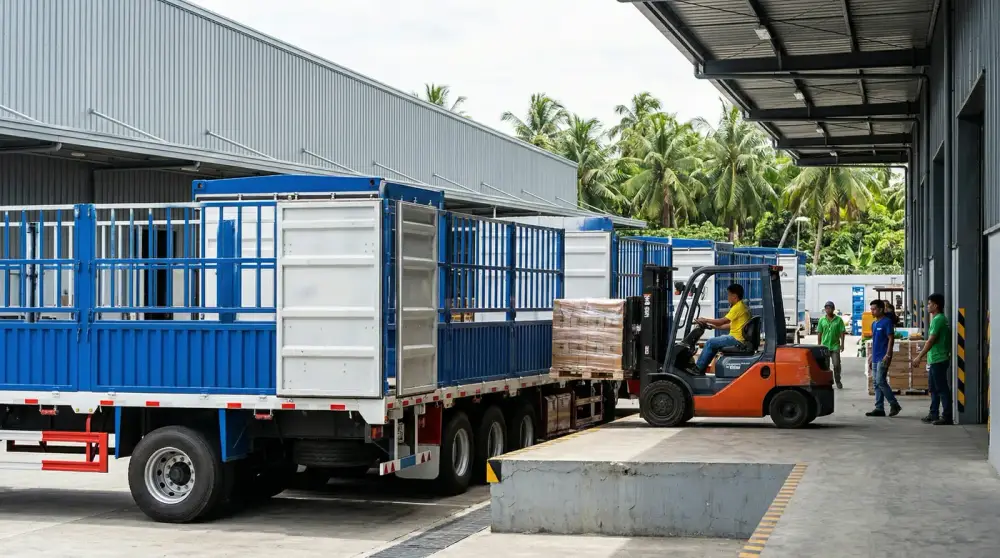
The client runs general freight across Luzon, Visayas, and Mindanao. Their cargo mix in a typical week includes rice and agricultural products from rural provinces, cement bags and rebar for construction sites, and consumer goods for retail chains. The same truck might haul bagged rice from Central Luzon to Manila on Monday, then reposition to carry a container from the port to a warehouse in Cavite on Tuesday.
They needed trailers that could handle all of that without spending half a day reconfiguring the vehicle between loads.
The Dual-Purpose Requirement
The client's core requirement was a side wall trailer that could work as two vehicles in one:
- Walls installed: Carry bulk goods — rice bags, cement bags, aggregate, fertilizer. The 1.2m wall height contains stacked cargo and allows tarpaulin covering for weather protection during monsoon season
- Walls removed: Carry standard 20ft and 40ft shipping containers using 12 integrated twist locks. The crew should be able to convert the trailer in under 30 minutes with basic hand tools
Beyond versatility, the Philippine climate drove a second critical requirement: corrosion resistance. Manila sits on the coast. Their routes include highway segments running within a few kilometers of the sea. Salt air combined with monsoon humidity from June through November accelerates corrosion on steel equipment that isn't properly protected.
Other specifications:
- 3-axle, 60T payload — handles fully loaded containers and bulk cargo within Philippine road weight regulations
- FUWA axles — parts available through several distributors in Manila. The client had existing FUWA experience in their fleet
- Q345 steel main beams with 3mm diamond steel plate flooring — the diamond pattern gives crew traction while walking the deck during loading and prevents cargo sliding during transport
Building for the Tropics
We built the 20 units on our side wall production line with one specification upgrade that set this order apart from a standard build: the surface treatment.
Standard trailer paint is fine for dry or temperate climates. For the Philippines — tropical humidity, coastal salt exposure, and monsoon downpours — we applied an enhanced three-layer coating:
- Shot blasting to SA 2.5 standard — a cleaner surface profile than our standard specification, giving the primer more surface area to grip
- Zinc-rich primer — sacrificial zinc protection that keeps working even if the topcoat gets scratched or chipped from dock loading
- Marine-grade polyurethane topcoat — UV-resistant and salt-spray rated
This coating system costs more than standard paint. But we've seen enough trailers come back from tropical markets with advanced frame corrosion after 2–3 years on standard coating to know the upfront investment is justified. The client understood this from their own fleet experience and prioritized it in the specification.
The removable side wall panels were built with quick-release pins and locking mechanisms that one person can operate. We timed the conversion process in our factory — panel removal from walls-up to flatbed configuration takes about 25 minutes with two crew members working both sides.
Shanghai to Manila
The 20 trailers shipped from Shanghai to Manila on a direct sailing — shorter transit time than routing through a transshipment hub, and less exposure to sea spray during ocean transit for the unpainted connection hardware.
Along with the trailers, we shipped a spare parts package covering common wear items for the first year: brake linings, landing gear grease, side wall panel pins, and spare twist lock assemblies. Having those spares on hand from day one means the client's maintenance team doesn't sit idle waiting for an international parts order during the critical break-in period when they're learning the equipment.
Fleet Consolidation in Practice
The result the client was most satisfied with wasn't technical — it was operational. By running dual-purpose side wall trailers across their network, they eliminated the need to maintain separate flatbed and side wall fleets for different cargo types.
Routes that previously required dispatching the right trailer type for the right cargo could now be served by any available unit. That reduced vehicle idle time — fewer trailers sitting in the yard waiting for a matching cargo assignment — and simplified scheduling for their dispatch team managing shipments across the island network.
For operators in similar markets where cargo variety is high and fleet specialization is impractical, the dual-purpose side wall design continues to be one of our most recommended configurations. The operational flexibility it provides outweighs the modest premium over a standard flatbed.