HUAYU Factory Strengthens Oil Tanker Cooperation with Partners from Tanzania and Saudi Arabia
25 engineers · ISO 9001 · 3C certified · Liangshan factory since 2001
Updated 2026-03-31
Why They Came to Liangshan
Fuel distribution across East Africa and the Middle East runs on tanker trailers. The operators who move diesel, gasoline, and crude oil across Tanzania's trunk roads or between Saudi Arabia's refineries and distribution depots need equipment that holds up — under heat, over rough surfaces, and across thousands of kilometers per month.
Two groups of international partners reached out to us separately, both looking for the same thing: a manufacturer they could visit in person, inspect production firsthand, and discuss long-term supply for their regional markets. We invited them to our production base in Liangshan for a combined factory tour and technical exchange.
What They Inspected
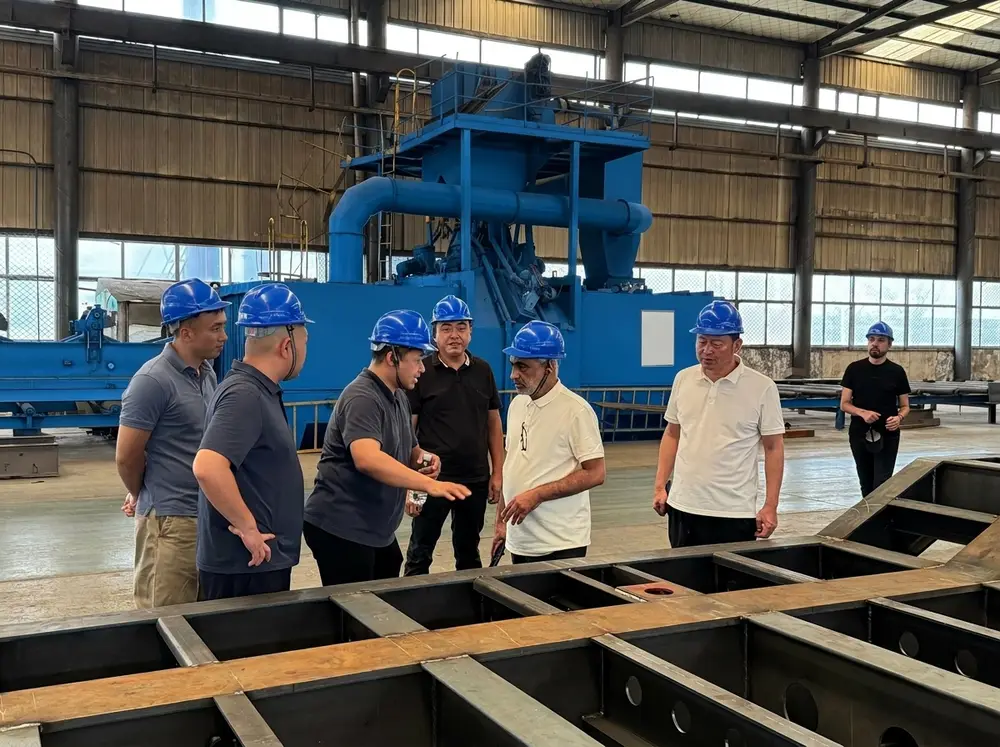
The visit was hands-on. Both partner groups spent time on the production floor, not in a conference room looking at slides.
They walked the oil tanker trailer production line and focused on the details that matter for fuel transport safety:
- Chassis and frame structure — welded main beams, cross-member spacing, and how the tank body mounts to the frame. One partner's engineer specifically checked the connection points between the tank saddle supports and the longitudinal beams, since that joint absorbs the most stress when a loaded tanker brakes or turns
- Welding quality — tank body seams using argon arc welding with manual grinding on ring butt welds. Clean welds are not cosmetic on a fuel tanker — they determine whether the tank holds pressure over years of road vibration and thermal cycling
- Hydraulic and pneumatic systems — API pneumatic bottom valves, discharge valve sizing, and the emergency shutoff configuration. The Tanzanian partner's team tested valve actuation speed, since their drivers need fast shutoff capability at roadside fuel depots
- Safety configurations — grounding chains, anti-static strips, fire extinguisher mounts, and the baffle plate layout inside the tank compartments. Baffles control liquid surge during braking and cornering — their size and placement directly affect vehicle stability with a partially loaded tank
Our engineering team walked through the full quality control process: from incoming material inspection on Q235 carbon steel plate, through tank forming and welding, to the final water pressure test at 0.036MPa and air tightness test at 0.36KPa. Every tanker gets both tests. No exceptions, no shortcuts.
Tanzania: Built for the Road Conditions
The Tanzanian partner operates fuel distribution along routes that connect Dar es Salaam port to inland cities and across the border into neighboring countries. These routes include well-maintained tarmac sections, but also stretches of deteriorated pavement and unpaved segments that get worse during the rainy season.
For this market, we discussed specifications based on our 40,000L carbon steel oil tanker — a proven configuration for African fuel transport:
- Carbon steel tank body (5mm Q235) — easier to repair in the field than aluminum. Welding shops capable of working with carbon steel are available in most Tanzanian cities. Aluminum welding requires specialized equipment that is harder to find outside Dar es Salaam
- 6-compartment layout — allows multi-product delivery (diesel and gasoline) on a single route, reducing empty return trips
- FUWA 13T axles with mechanical suspension — the same reasoning that drives most of our East African orders. Mechanical leaf springs handle rough roads reliably and can be serviced at local workshops. Air suspension offers a smoother ride but limited repair options inland
- JOST landing gear and king pin — standardized components that match the partner's existing fleet, keeping spare parts inventory simple
HUAYU tankers have been running Tanzanian roads for years. The partners we spoke with confirmed what our existing clients in the region have told us: the combination of a heavy-gauge carbon steel tank, mechanical running gear, and brand-name components (FUWA, JOST, BPW) is what keeps tankers operational in markets where downtime is expensive and specialized repair shops are far apart.
Saudi Arabia and the UAE: Heat, Standards, and Corrosion
The Middle Eastern partner's requirements were different. Saudi Arabia and the UAE have well-maintained highway networks, so road surface durability is less of a concern. The challenges are environmental: ambient temperatures regularly exceed 50°C, humidity in coastal areas accelerates corrosion, and local regulatory standards impose specific safety and material requirements on fuel transport equipment.
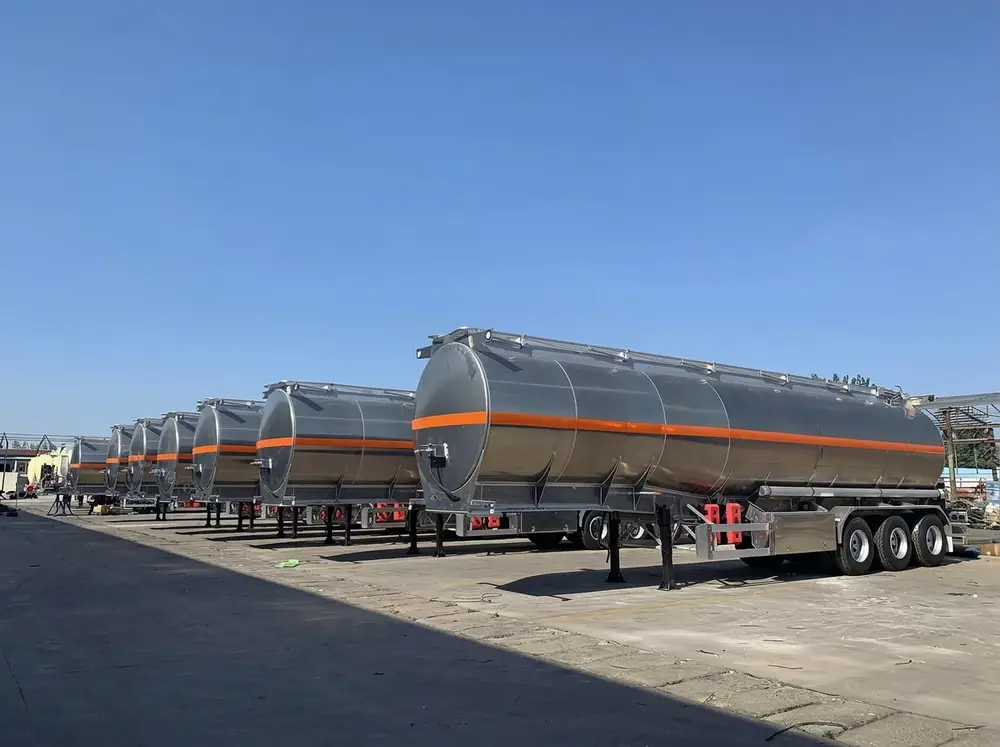
The discussion centered on our 45,000L aluminum fuel tanker and 42,000L aluminum tanker configurations:
- Aluminum alloy tank body — lighter than carbon steel at the same capacity, which means more payload per trip under GVW limits. Aluminum also forms a natural oxide layer that resists corrosion without coatings — a real advantage in the salt-air coastal environment around Jeddah and Dammam
- Upgraded safety systems — the Saudi market requires specific fire suppression, grounding, and emergency valve configurations that go beyond standard specifications. We reviewed our ability to customize these systems to match local regulations
- Heat-resistant seals and gaskets — standard rubber compounds degrade faster in sustained high temperatures. For Gulf-region tankers, we use upgraded materials at gasket and valve seal points
- BPW axles — widely stocked across the Middle East. BPW service centers in Riyadh, Jeddah, and Dubai mean parts and technical support are locally available
The customization discussion got specific. The partner brought drawings showing the valve and pipeline layout their fuel depot infrastructure requires, and our engineering team confirmed which configurations we could accommodate within our standard production process and which would require tooling adjustments.
What Both Sides Agreed On
By the end of the visit, both partner groups had seen enough to move from "evaluating manufacturers" to "planning orders." The discussions covered:
- Tanker specifications — finalized configurations for each market, including tank material, compartment count, axle brand, and safety equipment
- Delivery schedules — production lead times for initial orders and the capacity to scale up for repeat orders as their distribution networks grow
- Long-term cooperation — framework for ongoing supply, including how to handle specification changes as local regulations evolve and how HUAYU's after-sales support works across time zones
The Tanzanian partner noted that HUAYU's experience supplying tankers to other East African operators — Kenya, Uganda, Ghana — gave them confidence that we understand the specific demands of that market. They are not our first African fuel tanker customer, and the feedback loop from existing users in the region has shaped our standard African-market configurations.
On the Saudi side, the focus was customization capability and compliance documentation. Getting a tanker through Saudi customs and into service requires paperwork that proves the equipment meets local standards. We walked through our documentation process, including pressure test certificates, material certificates, and the technical drawings package that ships with every order.
HUAYU's Position in Fuel Tanker Export
We have been manufacturing fuel tanker trailers for export markets across Africa, the Middle East, Southeast Asia, and Central Asia for over a decade. The product line ranges from 20,000L to 90,000L capacity, in carbon steel, aluminum alloy, or stainless steel, with component choices that match local parts availability in each region.
Factory visits like this one are part of how we do business. Buyers in the fuel transport sector are spending serious money on equipment that needs to perform safely for years. Walking the production line, checking weld quality in person, and talking directly with the engineers who design the tanker — that builds a different kind of confidence than looking at photos and spec sheets.
If you are sourcing oil tanker trailers for fuel distribution in Africa, the Middle East, or other international markets, contact our team to discuss specifications, pricing, and factory visit arrangements.