50000 Liters Aluminum Alloy Fuel Tanker Trailer Exported to Chile
25 engineers · ISO 9001 · 3C certified · Liangshan factory since 2001
Updated 2026-04-05
Why a Chilean Fuel Transporter Switched from Carbon Steel to Aluminum
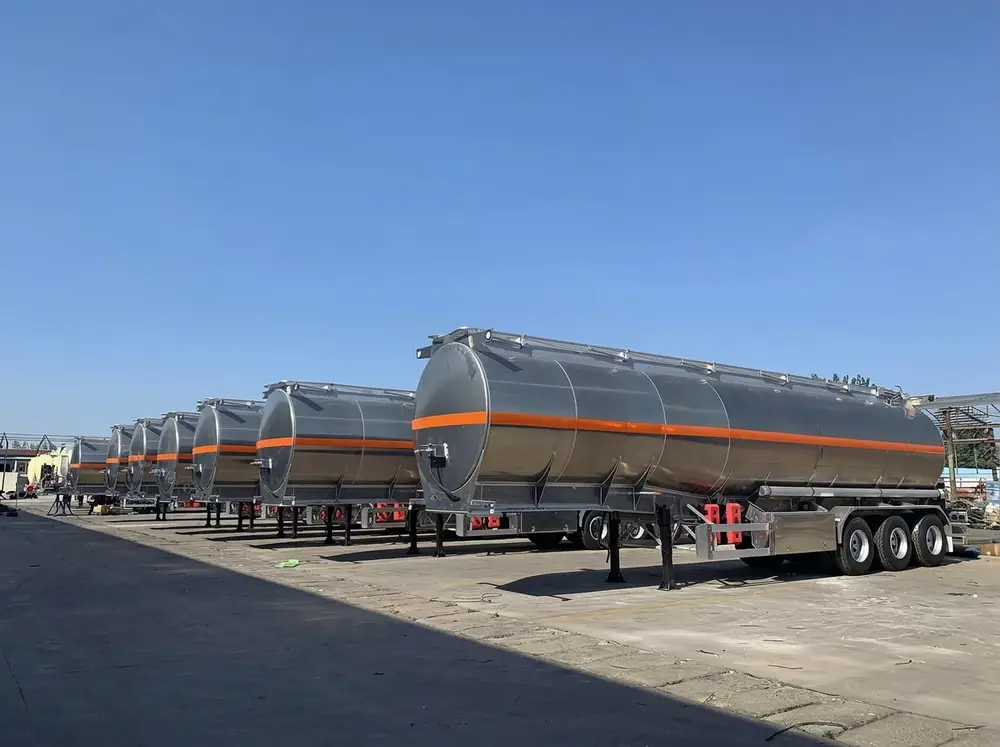
A customer from Chile reached out to HUAYU after running Q345B carbon steel tank trucks for the better part of two decades. Their fleet had served them well, but the math was shifting: Chile's coastal humidity was eating into maintenance budgets, and every kilo of tare weight translated directly into lost payload on their routes. They wanted something that would last longer, weigh less, and stop rusting.
Our sales director walked through the options with them and recommended a 50,000-liter 3-compartment 5182 aluminum alloy fuel tanker trailer. The 5182 alloy grade was chosen specifically for its weldability and resistance to stress corrosion cracking — two properties that matter when a tanker runs coastal routes in a humid, salt-air environment year-round.
Importing a tank semi-trailer from China to South America is not cheap. Sea freight alone adds a significant cost layer. But this buyer had done the calculation: an aluminum tanker weighs roughly 3,000 to 4,000 kg less than an equivalent carbon steel model at the same capacity, which means more fuel carried per trip and lower toll charges on weight-restricted roads. Over a 15-to-20-year service life with zero anti-corrosion treatment needed, the total cost of ownership tilts heavily in aluminum's favor.
50,000-Liter Aluminum Fuel Tanker: Configuration Summary
Here is the configuration we built for this Chilean order:
| Specification | Detail |
|---|---|
| Total Capacity | 50,000 liters (50 CBM) |
| Compartments | 3 |
| Tank Material | 5182 aluminum alloy |
| Manhole Type | European standard (top-mounted) |
| Discharge Valves | Bottom oil valves (API RP 1004 compliant) |
| Safety Equipment | Subsea emergency shutoff valve, anti-overflow sensor, vapor recovery system |
| Braking System | Front disc brake + rear drum brake |
This setup is representative of what HUAYU builds for South American and Middle Eastern markets where operators need large-capacity aluminum tankers with international-standard fittings. For buyers evaluating their first tanker purchase from China, our guide on what to pay attention to when buying a tanker for the first time covers the key decision points.
How 5182 Aluminum Alloy Resists Corrosion Without Maintenance
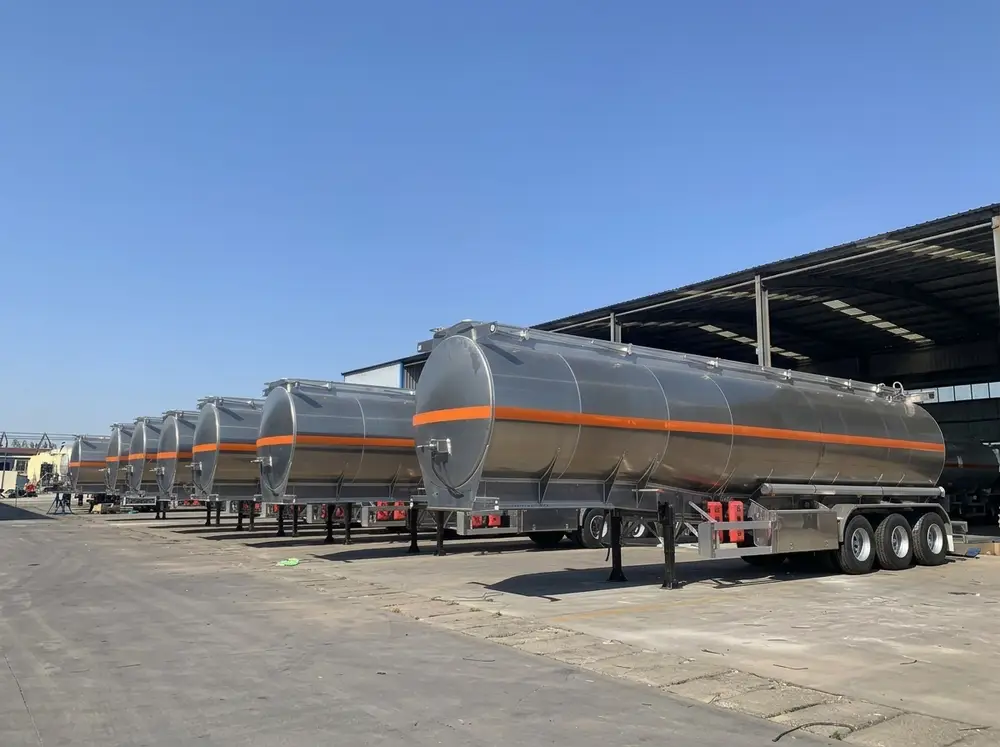 Close-up of 5182 aluminum alloy fuel tanker body showing the smooth surface finish and corrosion-resistant properties
When 5182 aluminum is exposed to air, it forms a thin, dense layer of aluminum oxide on its surface almost immediately. That oxide film bonds tightly to the base metal and acts as a natural barrier against moisture, salt spray, and atmospheric corrosion. Unlike carbon steel, which needs periodic repainting and anti-rust treatment, aluminum alloy tanks can run their full service cycle — typically 15 to 20 years — with no anti-corrosion maintenance at all.
For a fuel transporter operating near Chile's 6,000+ km coastline, that matters. Carbon steel tankers in humid, salt-air environments often need their first major anti-corrosion overhaul within 5 to 8 years. With aluminum, that cost simply disappears from the maintenance schedule.
The oxide layer also keeps the transported fuel clean. There is no rust contamination risk, which is a real concern with aging carbon steel tanks — especially when hauling refined products like gasoline or diesel that have tight quality specs at the receiving depot.
For more on how different tank materials handle various liquid cargoes, see our guide on what liquids tank semitrailers can transport.
Safety Equipment on This 50,000L Aluminum Fuel Tanker
The components on this Chilean order are standard across HUAYU's aluminum fuel tanker line. Here is what each one does and why it was specified.
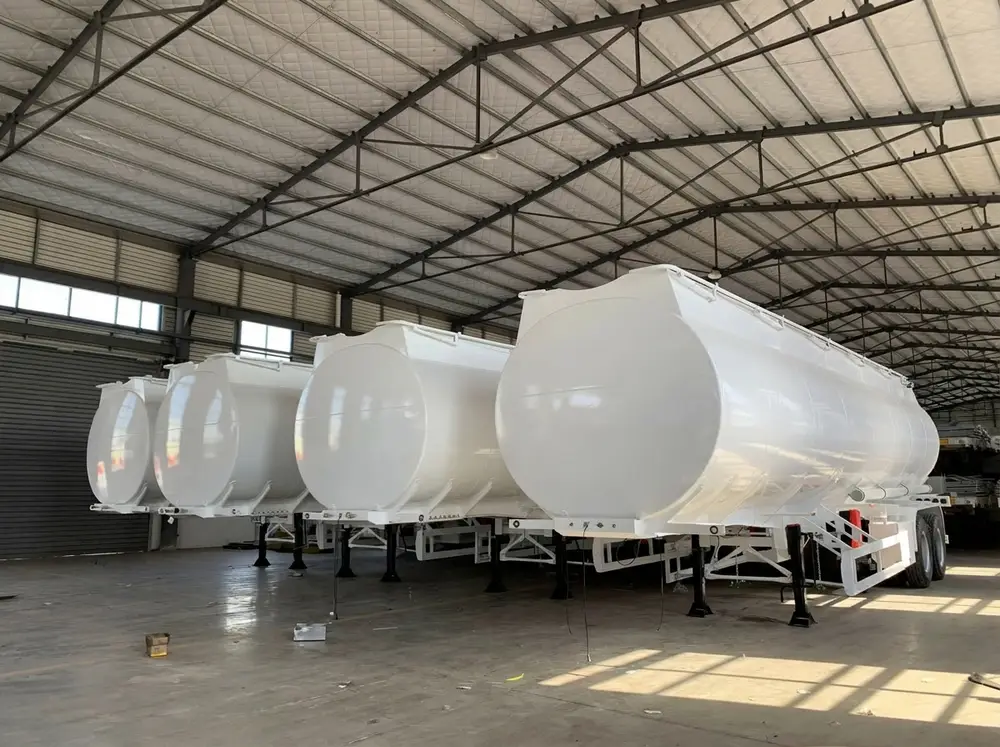 50,000-liter aluminum alloy fuel tanker trailer showing the full safety equipment configuration
European Standard Manhole
The top-mounted manhole is more than just an access hatch. It integrates a breathing valve, a vapor recovery valve, an oil metering hole, and an anti-overflow sensor into a single unit. During filling, the sensor monitors fuel levels and triggers an automatic shutoff when the tank hits the alarm limit. During transport, the breathing valve balances internal pressure so the tank shell is never stressed by vacuum or overpressure — particularly important on Chile's mountain passes where altitude changes are rapid.
Vapor Recovery System
Every liter of fuel vapor that escapes during loading and unloading is product loss — and an environmental violation in most markets. The vapor recovery system, mounted on the left side of the pipeline outlet, captures all vapor generated during transfer operations and routes it back for recovery. This is not optional equipment in countries with emissions regulations, and it is standard on every HUAYU fuel tanker.
Disc and Drum Brake Combination
The front axle runs a two-piece cast iron disc brake for rapid heat dissipation during repeated stops, while the rear axles use drum brakes with expanding pads for sustained braking force on long descents. Chile's Andes routes regularly include 10+ km downhill stretches, and the disc/drum split gives drivers confidence on both emergency stops and extended brake applications.
Bottom Discharge Valve (API RP 1004)
Fuel depots across South America use API-standard hose connections, so the bottom oil valve on this tanker follows the API RP 1004 specification. The internal geometry is shaped to reduce turbulence at high flow rates, which speeds up unloading and minimizes the pressure spike that can trigger safety valves on older depot infrastructure. The flat-bottom design also means the valve can be removed for cleaning or replacement without residual fuel leaking out.
Subsea Valve (Emergency Shutoff)
If the tanker is hit by a collision or rollover that puts lateral force on the discharge piping, the subsea valve cuts the oil pipeline in under 5 seconds. This is the tanker's last line of defense against a catastrophic fuel spill. It sits at the oil outlet, between the tank body and the external piping, so that even if the external plumbing is torn off entirely, the tank itself stays sealed.
Anti-Overflow Sensor
Mounted on the manhole cover, this sensor works during filling operations at the depot. When the fuel level reaches the preset warning line, it automatically stops the filling pump. Overfilling a fuel tanker is not just a spill risk — it eliminates the vapor space needed for thermal expansion during transport, which can build dangerous internal pressure on hot days. This sensor prevents both problems.
Quality Control Before Export
Every HUAYU fuel tanker goes through a full inspection sequence before leaving the factory, including pressure testing (water pressure at 0.036 MPa and air tightness at 0.36 KPa), weld seam NDT checks, and a final visual inspection. For a detailed walkthrough of each stage, see our oil tank semi-trailer quality inspections guide.
Get a Quote for Aluminum Fuel Tankers
This Chilean buyer came to us after years of running carbon steel tankers and made the switch based on the weight savings and maintenance math. If you are looking at a similar decision — or sourcing your first aluminum fuel tanker — reach out to our sales team with your target capacity, route conditions, and local fitting standards. We build aluminum, carbon steel, and stainless steel tankers from 20,000L to 90,000L, and every unit is configured for the market it will operate in.
New to importing fuel tankers from China? Our step-by-step buying guide covers the full process from specifications to shipping.