Middle Eastern Customers Visit HUAYU Semi-Trailer Manufacturing Factory
25 engineers · ISO 9001 · 3C certified · Liangshan factory since 2001
Updated 2026-04-05
Why UAE Engineers Flew to Shandong to Inspect a Semi-Trailer Factory
Buying semi-trailers from overseas is not the same as buying them locally. You cannot drive to the factory after lunch, walk the floor, and decide over coffee. Middle Eastern buyers who source from China typically make one trip — maybe two — before placing a large order. That trip has to answer every question at once: Can this manufacturer actually build what they promise? Are the welding standards real or just numbers on a brochure? Do the production lines match the claimed capacity?
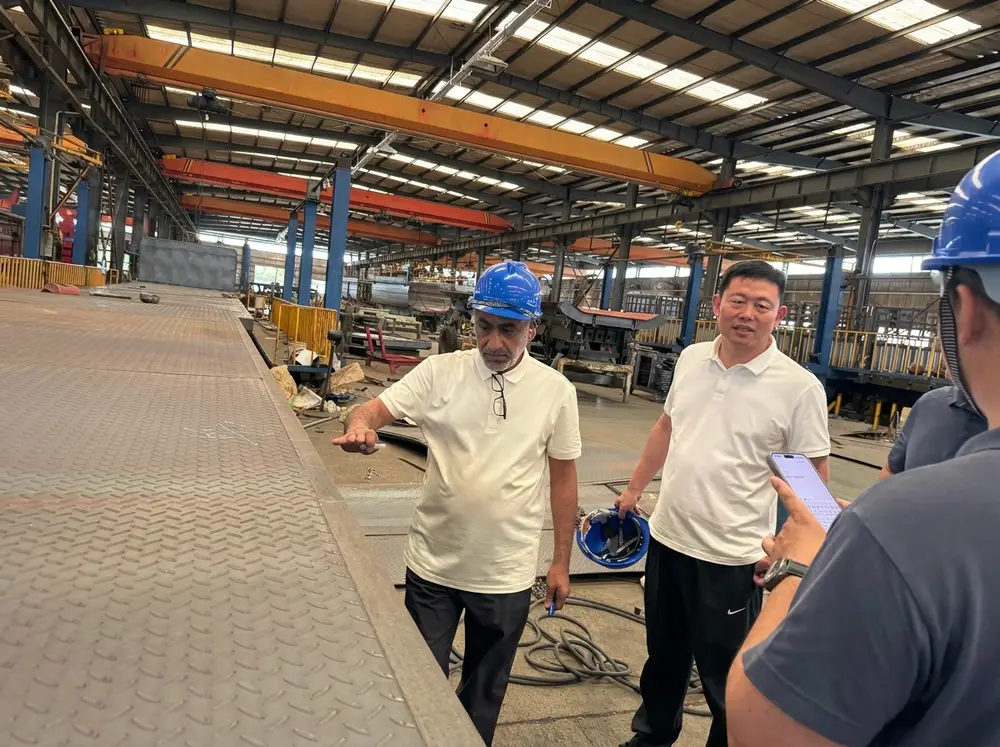
A team of engineers from the United Arab Emirates came to HUAYU's manufacturing base in Liangshan, Shandong Province to answer exactly those questions. They had been evaluating Chinese semi-trailer manufacturers for several months and wanted to see the production reality behind the spec sheets. The visit covered three product lines — fuel tanker trailers, tipper trailers, and flatbed semi trailers — along with a sit-down meeting with HUAYU's General Manager of International Business to talk numbers, timelines, and customization for Gulf market conditions.
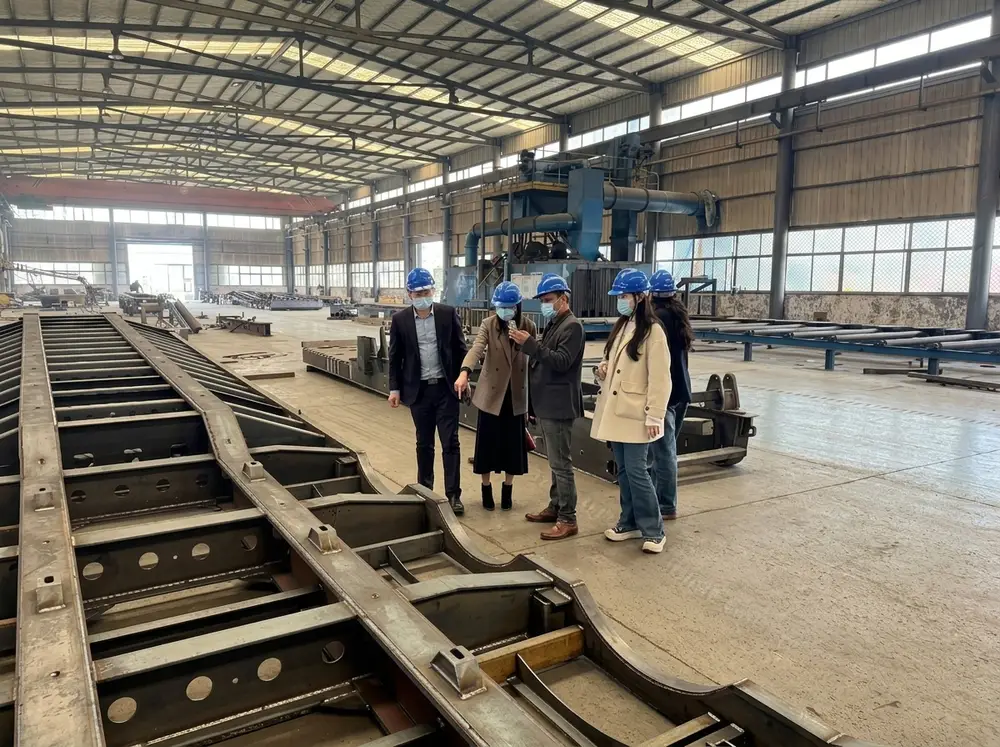
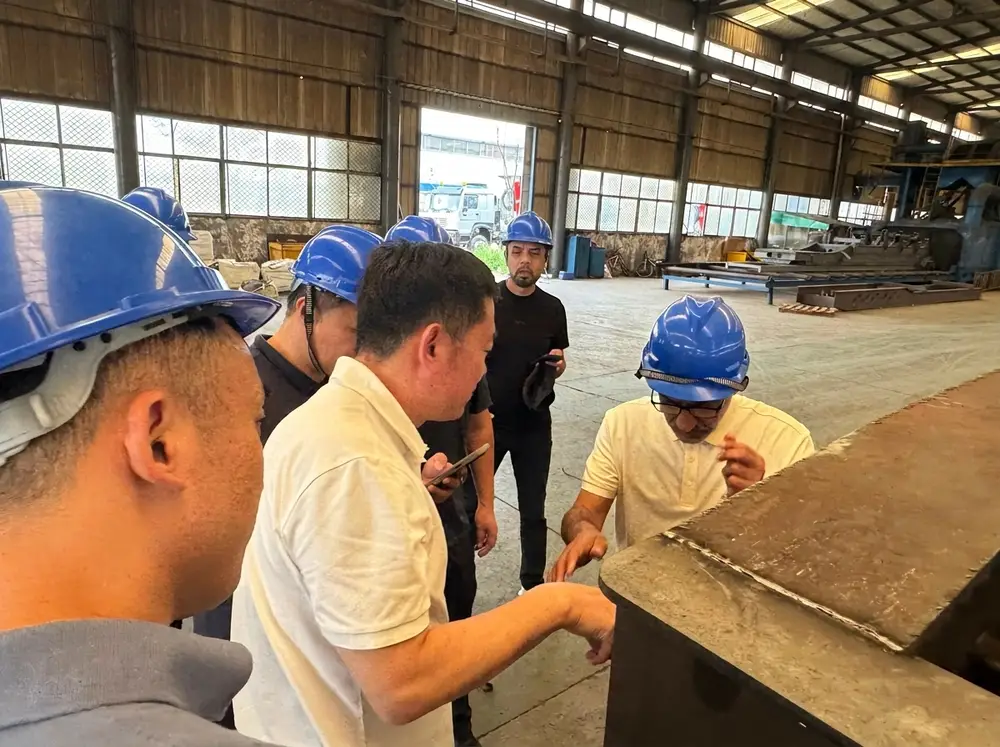 UAE engineers touring the semi-trailer production floor at HUAYU's Liangshan factory
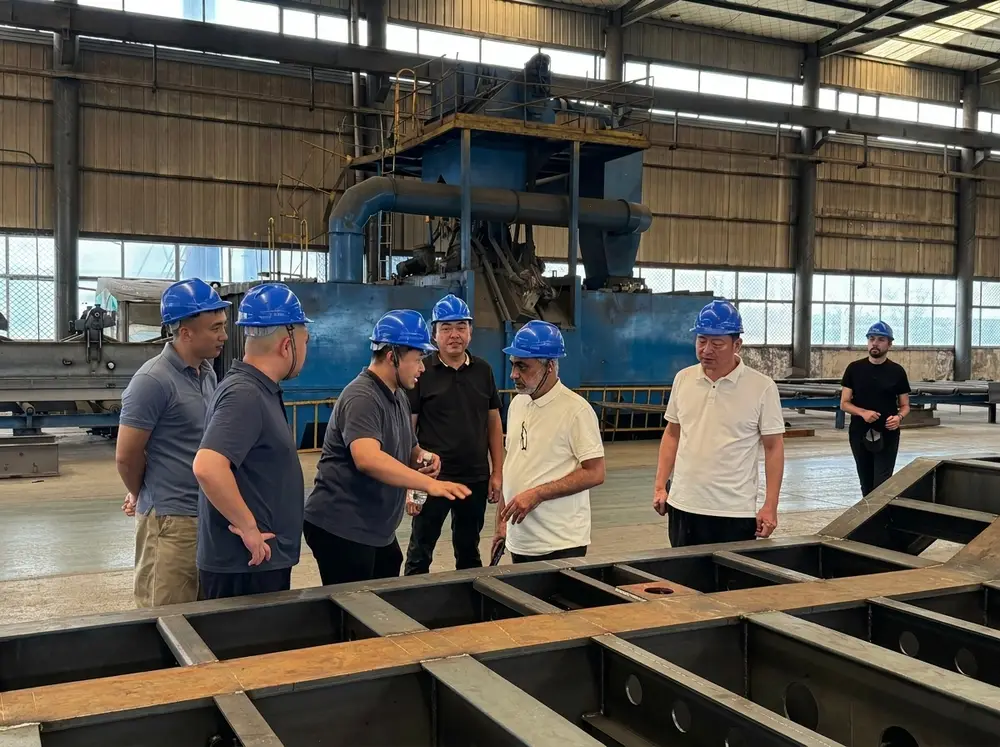
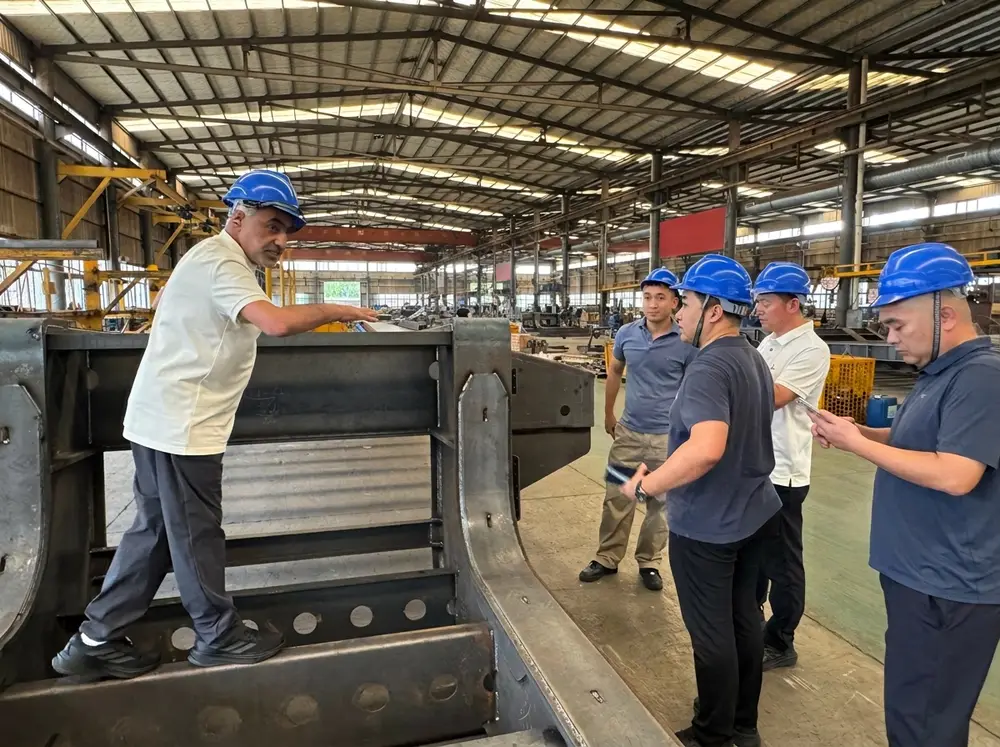 Engineers inspecting semi-trailer components during the factory walkthrough
What the Engineers Saw on the Production Floor
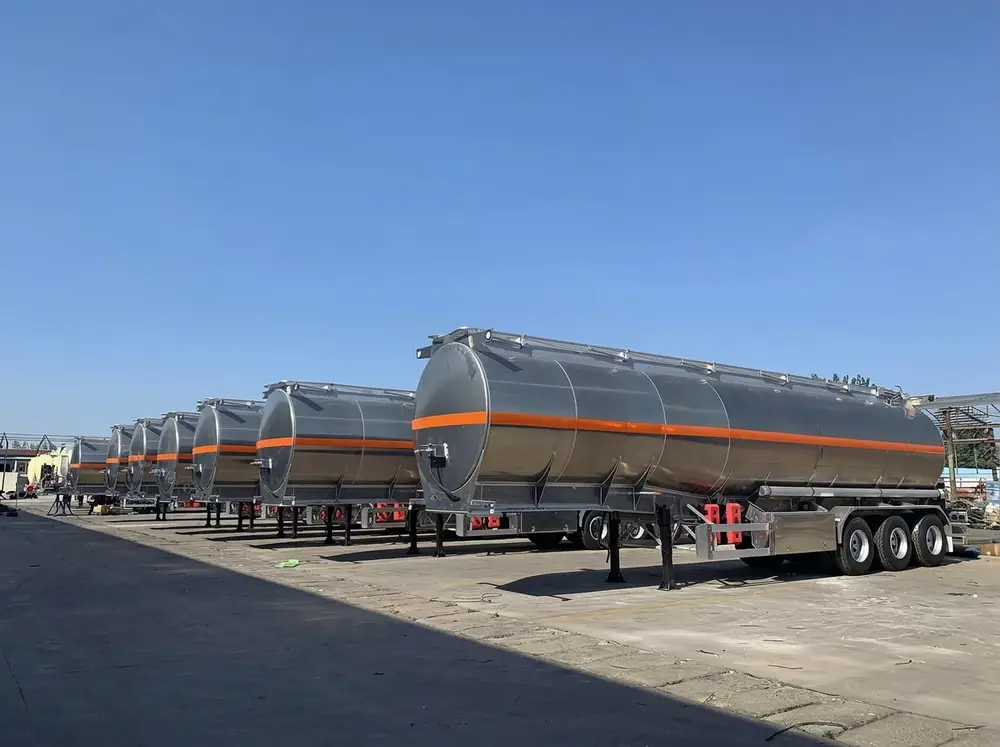
The tour started at the fuel tanker line. The UAE team watched the full sequence: steel plate cutting, tank shell rolling, longitudinal and circumferential welding, compartment divider installation, and the pressure testing station where every finished tank gets a water pressure test at 0.036 MPa followed by an air tightness test at 0.36 KPa. These are not spot checks — every single tanker goes through both tests before it moves to the next stage. The engineers asked detailed questions about weld seam quality, and HUAYU's QC staff walked them through the NDT (non-destructive testing) records for the batch currently on the line.
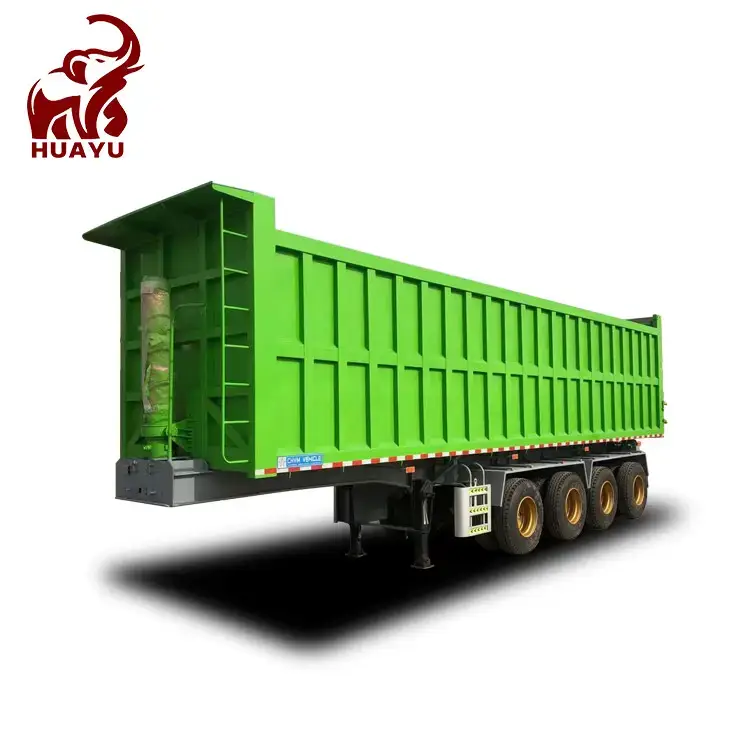
Next was the tipper trailer line. Here the focus shifted to structural reinforcement — how the dump body is braced to handle repeated loading cycles without developing fatigue cracks at the stress points. The engineers examined the hydraulic cylinder mounting process and the floor plate welding sequence, which determines how well the tipper holds up after thousands of dump cycles on construction sites.
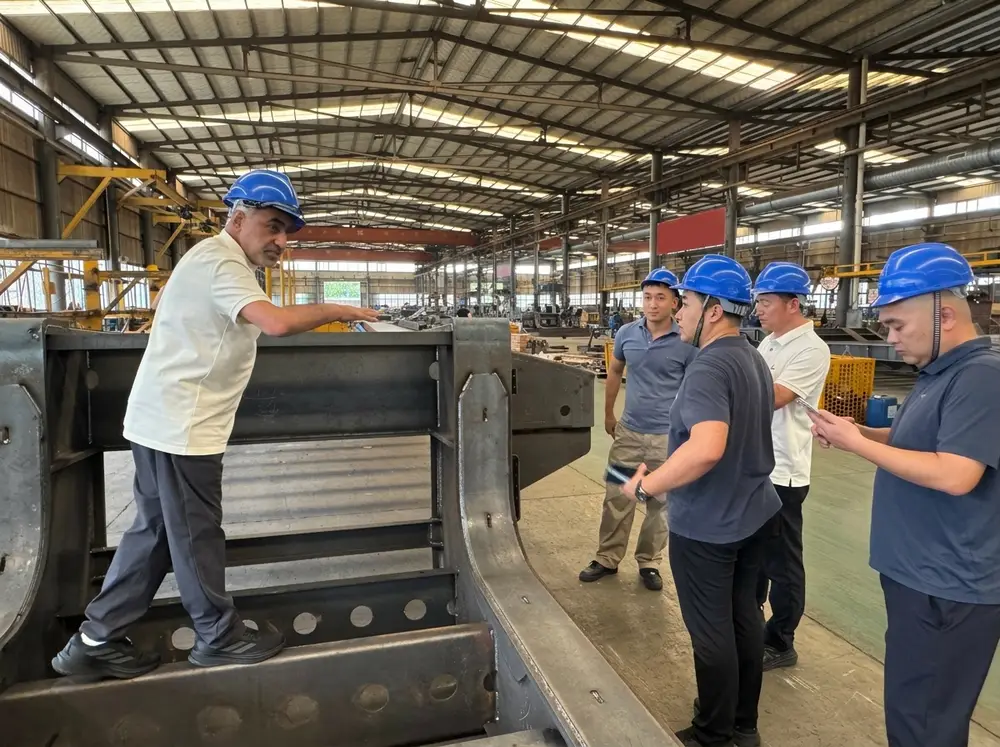
The flatbed line rounded out the production tour. The main beam structure — the I-beam or box beam that runs the length of the trailer — was of particular interest. The UAE team inspected the automated cutting station where beams are cut to spec, and the jigging process that holds everything in alignment during welding. A crooked main beam means uneven load distribution, which shows up fast on long-haul routes.
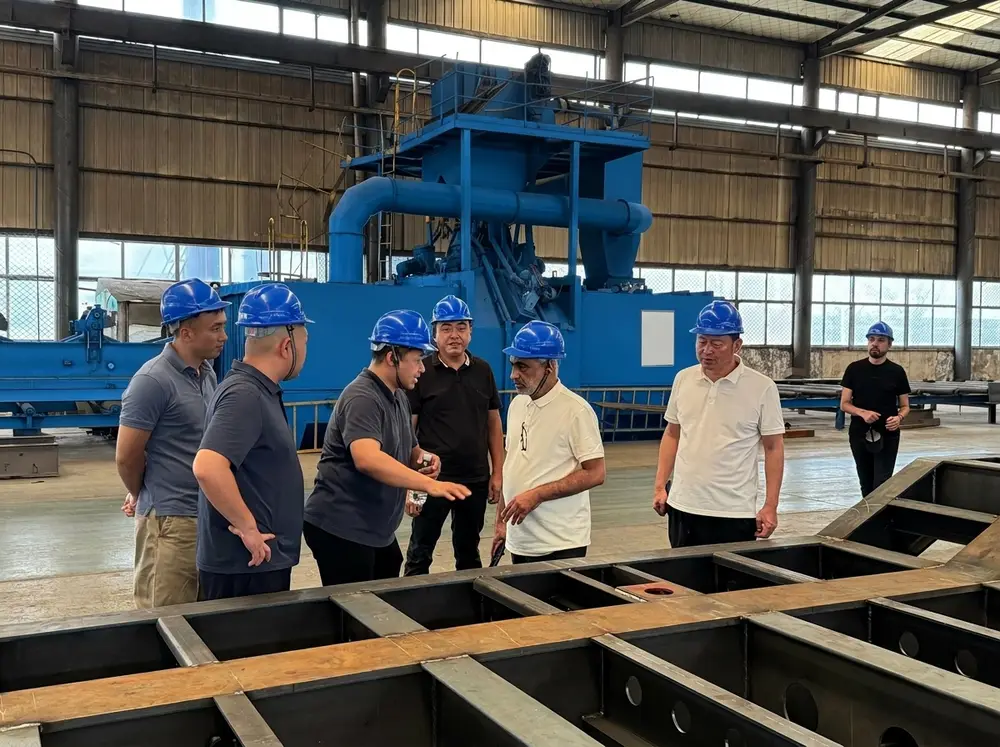
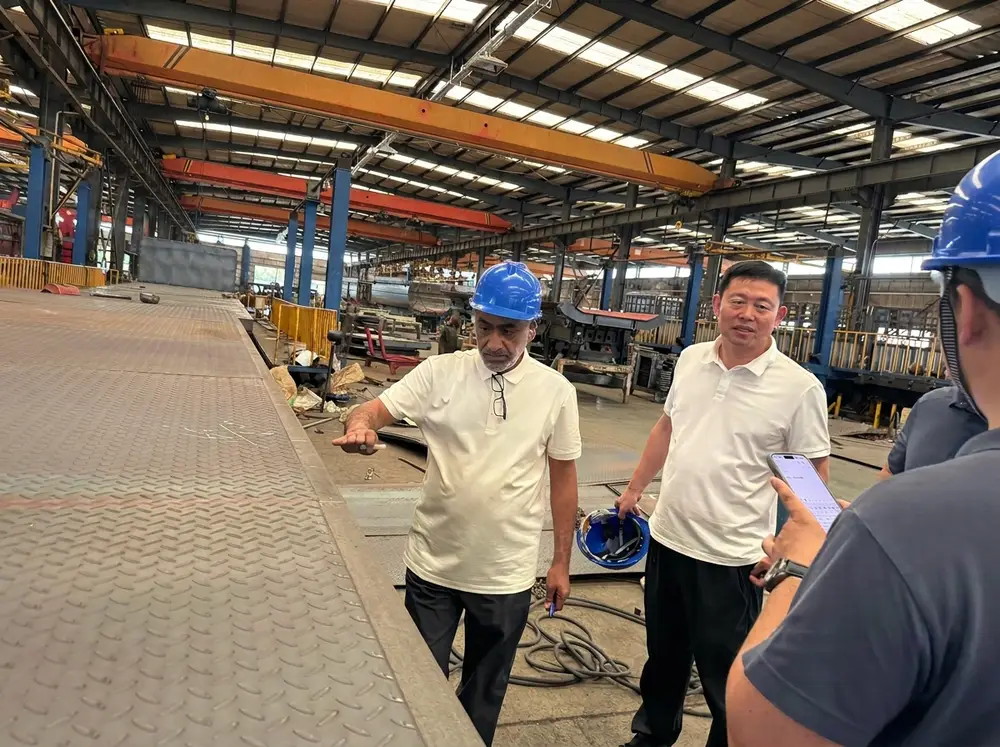 Engineers examining the production line processes at HUAYU factory
For anyone planning their own factory visit to evaluate a semi-trailer manufacturer, our guide on how to choose a reliable semi-trailer manufacturer covers what to look for on the production floor and which questions to ask.
Quality Control: What They Checked and Why It Mattered
The engineers were not just looking at equipment — they were verifying process consistency. Any factory can produce one good trailer. The question is whether the hundredth trailer off the line is built to the same standard as the first.
HUAYU runs quality checkpoints at every major production stage. Welding seams go through visual inspection first, then NDT on critical joints. Axle alignment is checked with laser measuring tools. Paint thickness is tested with a coating gauge. The engineers reviewed QC documentation for recent batches and compared it against the live production they were watching — a practical way to verify that the paperwork matches reality.
For a detailed look at the full inspection sequence for fuel tankers specifically, our oil tank semi-trailer quality inspections guide breaks down each stage from raw material intake to final sign-off.
Cooperation Meeting: Adapting Specs for Middle Eastern Conditions
After the production floor tour, the UAE team sat down with the General Manager of HUAYU's International Business Department. The conversation moved from "can you build it" to "can you build it for our roads."
Gulf region conditions put specific demands on semi-trailers that do not apply in cooler climates. Ambient temperatures above 50 degrees Celsius affect tire pressure, hydraulic oil viscosity, and brake performance. Sand and dust accelerate wear on exposed components. Road weight limits in the UAE and Saudi Arabia dictate axle configurations. The meeting covered all of this — which suspension setups handle desert heat best, which paint systems resist sand abrasion, and how to configure braking for heavy loads in extreme temperatures.
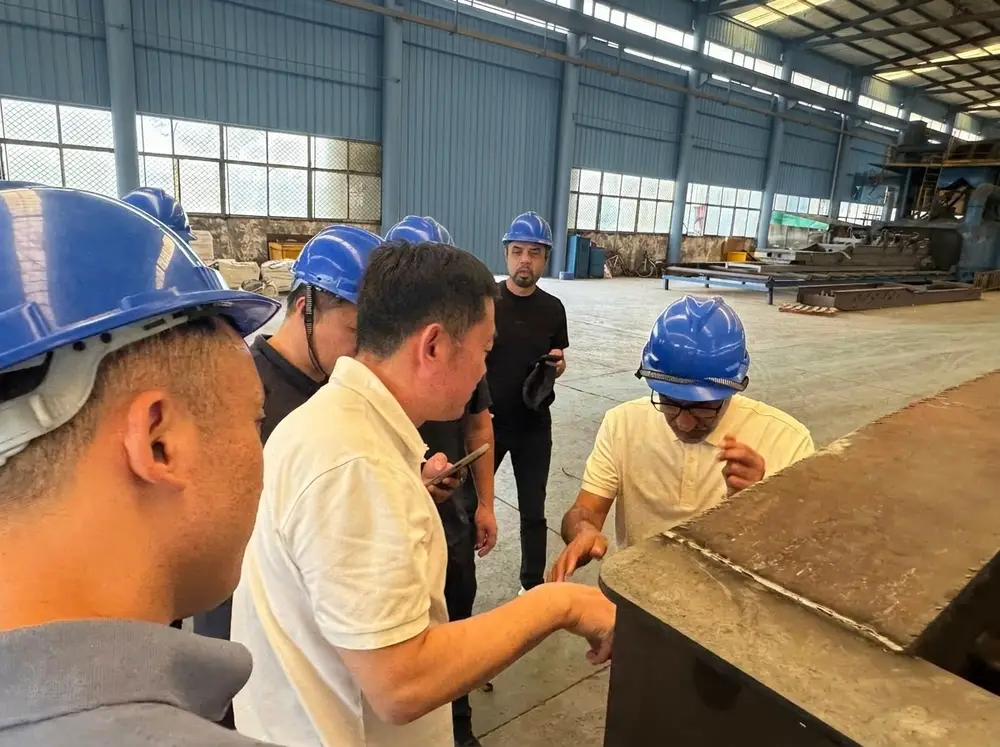 HUAYU management and UAE engineers discussing trailer specifications and cooperation terms
 Business meeting between HUAYU International Business Department and the UAE engineering team
The two teams confirmed a cooperation framework by the end of the meeting. The UAE side identified specific trailer models and quantities for an initial order, and the discussion covered after-sales support, spare parts availability in the Gulf region, and the production-to-port timeline. For buyers working through this process for the first time, our guide on how to buy a fuel tank trailer outlines the full sequence from initial specs to vessel booking.
HUAYU's Manufacturing Base: 800 Acres, 10 Product Lines
Part of the reason buyers fly to Liangshan is scale. HUAYU Group operates on more than 800 acres of land with 236,000 square meters of covered factory space. The operation integrates product design, R&D, manufacturing, and global sales on a single campus — which means the engineering team that designs a custom spec and the welders who build it are in the same facility.
 HUAYU factory campus showing the scale of the manufacturing facility
 Production buildings and logistics yard at HUAYU's Liangshan base
That footprint supports multiple production lines running at the same time: flatbed trailers, side wall trailers, fuel tanker trailers, bulk cement trailers, tipper trailers, skeleton trailers, and several other configurations. For buyers placing large orders — 20, 50, or 100 units — the practical benefit is shorter lead times. Multiple lines mean your order does not sit in a queue behind someone else's.
For a closer look at how a trailer moves through HUAYU's factory from steel plate to finished product, see our factory production process overview.
Arrange Your Own Factory Visit
Spec sheets and photos only tell part of the story. Walking a factory floor, watching trailers being built, and sitting across the table from the team that will handle your order — that is how you know what you are buying.
HUAYU's Liangshan facility is open to visiting buyers year-round. We handle airport pickup from Jinan Yaoqiang International Airport (about 2.5 hours by car to the factory) and can arrange hotel accommodations in Liangshan County. Contact our international sales team to schedule a visit — bring your spec requirements, and we will have the relevant production lines and finished units ready for your inspection.