Omani Dealers Visit HUAYU Semi-Trailer Factory for Technical Evaluation
25 engineers · ISO 9001 · 3C certified · Liangshan factory since 2001
Updated 2026-04-05
Why an Omani Dealer Team Flew to Shandong
When you sell semi-trailers in Oman, your reputation rides on every unit. A cracked weld or a leaking tank compartment does not just cost a repair bill — it costs you the next ten orders from that customer. So before an Omani dealer commits to a new Chinese manufacturer, someone from the team boards a flight and walks the factory floor.
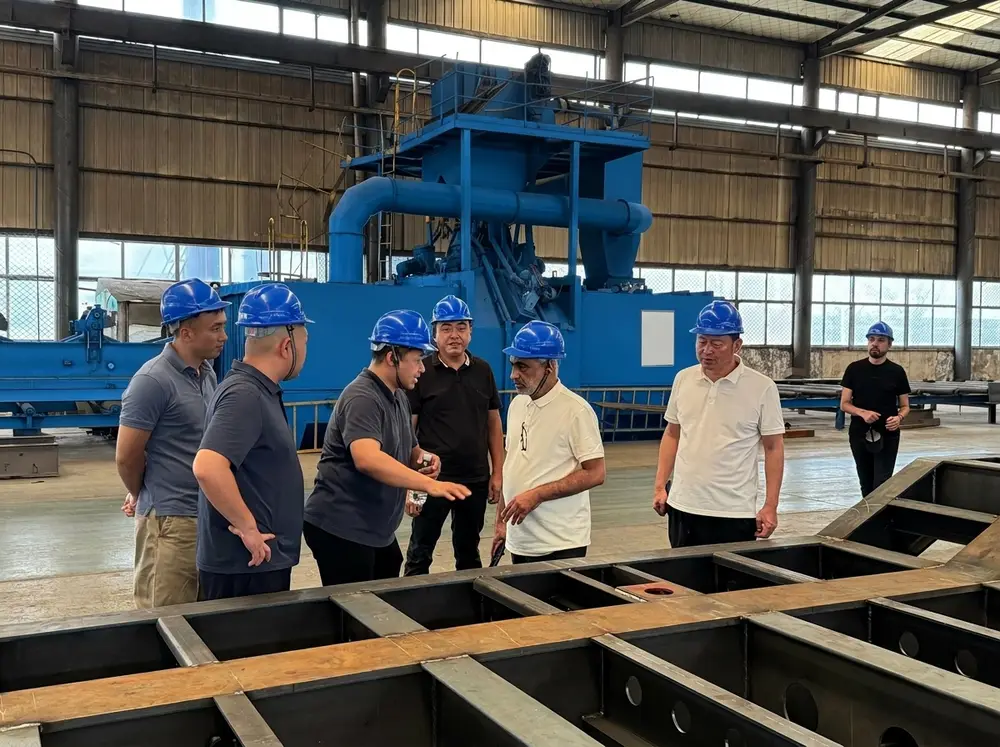
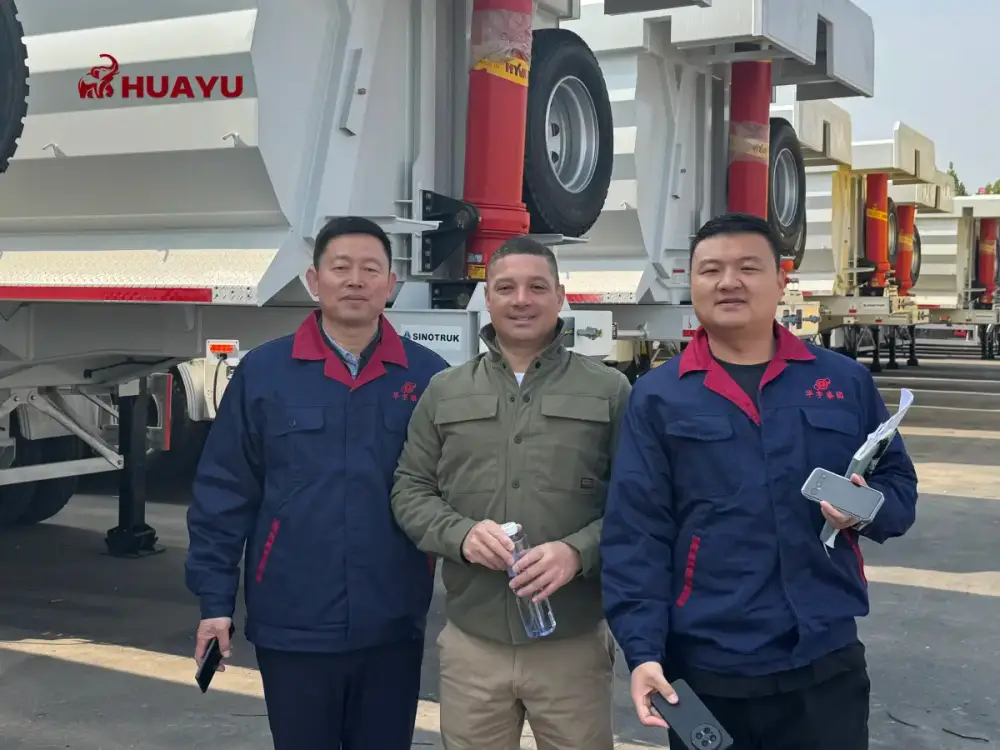
That is what happened here. A group of technical engineers representing an Omani dealership traveled to HUAYU's manufacturing base in Liangshan, Shandong Province. They had been comparing Chinese semi-trailer suppliers for several months and needed answers that product brochures could not give them. The visit focused on two lines — flatbed semi trailers and fuel tanker trailers — the two trailer types that move the most volume in the Omani market.
What They Checked on the Flatbed Line
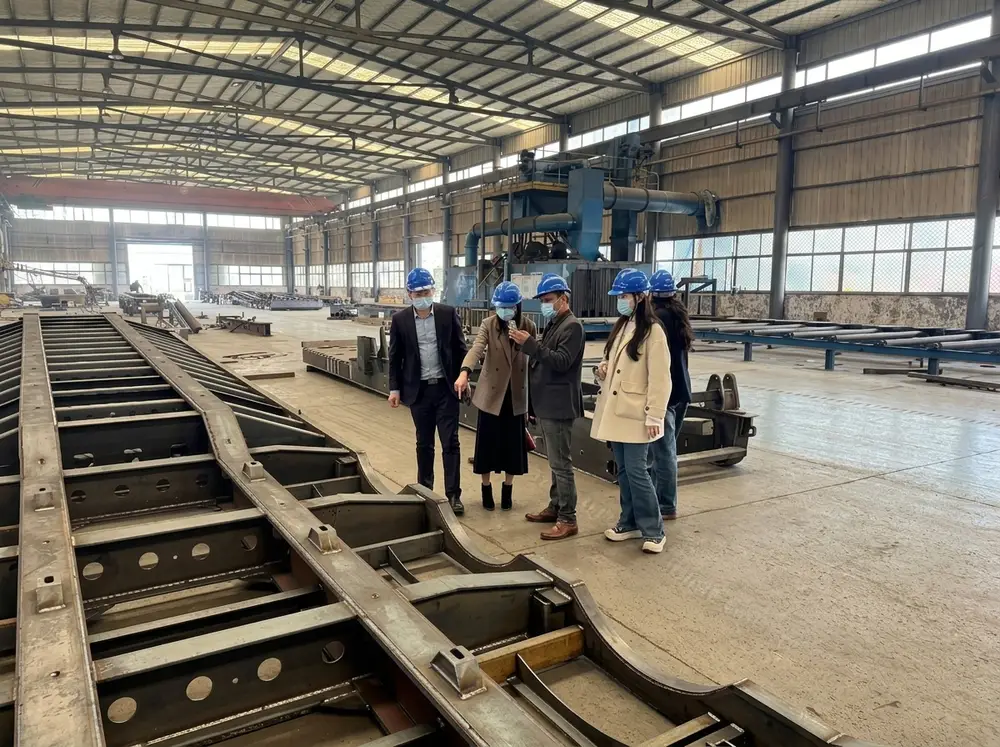
The team started at the flatbed trailer production hall. The first thing they looked at was the main beam fabrication — the I-beams that run the full length of the trailer and carry the entire load. HUAYU cuts these on an automated cutting station and holds them in jigging fixtures during welding to prevent warping. The Omani engineers checked the alignment of three finished beams with their own measuring tools before moving on.
Platform welding came next. Flatbed trailers hauling 20-foot and 40-foot containers across Oman's interior highways take sustained vibration and heat cycling. The engineers wanted to see how HUAYU handles the joint between the platform surface and the cross members — a stress point that determines how long the trailer lasts under repeated loading. They spent time examining weld penetration on several units at different stages of completion.
Oman's daytime temperatures push past 45 degrees Celsius in the summer months, and road surfaces in the interior get even hotter. The engineers asked specifically about the steel grade used for platform construction. HUAYU uses Q345B steel for structural members — a low-alloy, high-strength grade with good performance under thermal stress — which matched what the Omani team was looking for.
Fuel Tanker Inspection: Pressure Testing and Build Quality
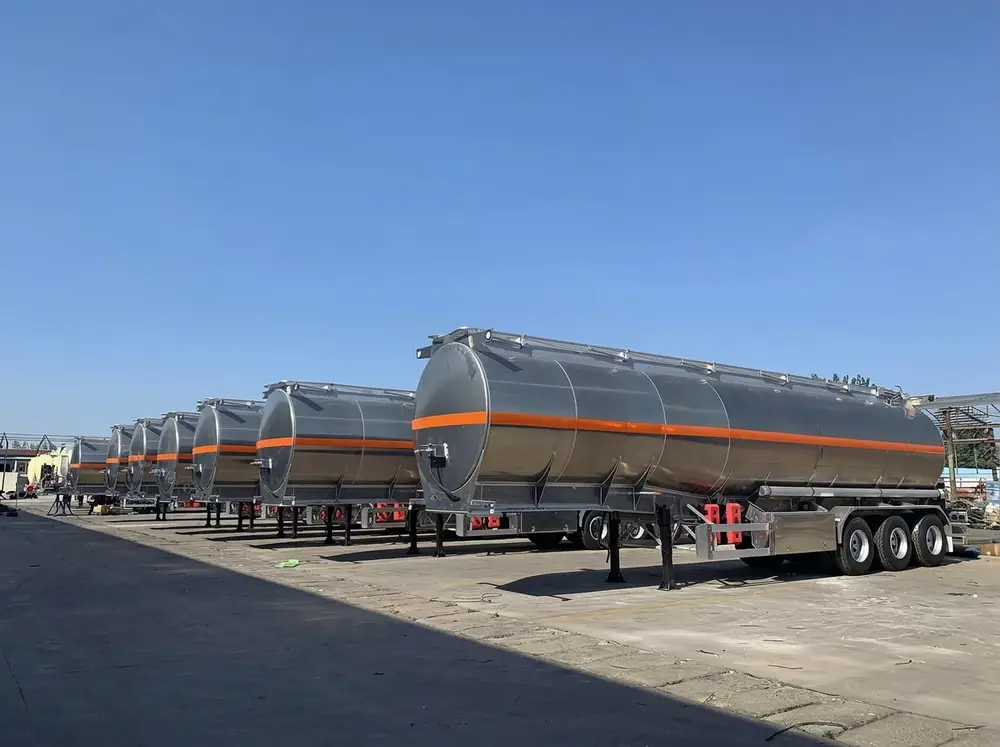
The fuel tanker line got the closest scrutiny. Tankers carry flammable cargo, and a defect that goes undetected in the factory shows up as a safety incident on the road. The engineers followed the entire production sequence: tank shell rolling from flat plate, longitudinal seam welding, circumferential welding at the section joints, and compartment divider installation.
The pressure testing station was where the team spent the most time. Every finished tank at HUAYU goes through two mandatory tests — a water pressure test at 0.036 MPa and an air tightness test at 0.36 KPa. These are not spot checks. Every single unit gets tested, and the results are logged against the tank's serial number. The Omani engineers reviewed the test logs for the batch that was currently on the line and compared the recorded values against the live test they watched.
They also looked at the NDT (non-destructive testing) process for critical weld seams. NDT uses methods like ultrasonic or radiographic inspection to detect internal weld defects that are invisible to the eye. For fuel tankers, where a hidden crack in a seam can lead to leakage under pressure, this step separates factories that build to specification from factories that just build fast.
For a detailed breakdown of the full inspection sequence for fuel tankers, see our guide on oil tank semi-trailer quality inspections.
The Meeting: Adapting Trailers for the Omani Market
After the production floor tour, the Omani team sat down with HUAYU's technical director from the foreign trade department. The conversation shifted from "how do you build it" to "how do you build it for our roads."
Oman's commercial vehicle market has specific requirements that differ from other GCC countries. Axle load limits, the mix of highway and off-road conditions in areas like Dhofar and Al Dakhiliyah, and the long distances between fuel depots all influence trailer configuration. The discussion covered suspension setups that handle high-temperature road surfaces, corrosion-resistant coatings for tankers exposed to salt air in coastal regions, and what delivery timeline looks like for an initial order.
The Omani team was direct about what they needed: consistent quality across every unit, not just the first batch. HUAYU's technical director responded in kind — every trailer goes through the same QC checkpoints regardless of order size, and the factory does not cut corners on rush orders. By the end of the meeting, both sides had agreed on a cooperation framework and the Omani team identified specific models and quantities for their first order.
For dealers and buyers working through the sourcing process, our guide on how to buy a fuel tank trailer covers the full sequence from specs to shipping.
HUAYU's Manufacturing Base: Scale Behind the Product
Part of what convinced the Omani team was the sheer size of the operation. HUAYU Group's Liangshan campus covers more than 800 acres with 236,000 square meters of factory floor. The entire process — product design, R&D, manufacturing, QC, and export logistics — runs from a single site. That means the engineering team that finalizes a custom specification and the welders who execute it work in the same facility.
Multiple production lines run simultaneously: flatbed trailers, fuel tanker trailers, side wall trailers, bulk cement trailers, tipper trailers, skeleton trailers, and more. For a dealer placing a multi-unit order, parallel production lines mean shorter lead times — the order does not sit in a queue behind someone else's.
To see how a trailer moves through HUAYU's factory from raw steel plate to finished product, read our factory production process overview.
Schedule a Factory Visit
Spec sheets tell part of the story. Walking the factory floor, watching trailers get built, and sitting across the table from the team that will manage your order — that is how you know what you are buying.
HUAYU's Liangshan facility is open to dealers and buyers year-round. We handle airport pickup from Jinan Yaoqiang International Airport (about 2.5 hours by car to the factory) and arrange hotel accommodations in Liangshan County. Contact our international sales team to set up a visit — bring your product requirements, and we will have the relevant lines and finished units ready for inspection.