
What Liquids Can Tank Semitrailers Transport?
Published Apr 4, 2026
25 engineers · ISO 9001 · 3C certified · Liangshan factory since 2001
Updated 2026-05-11
10 min read
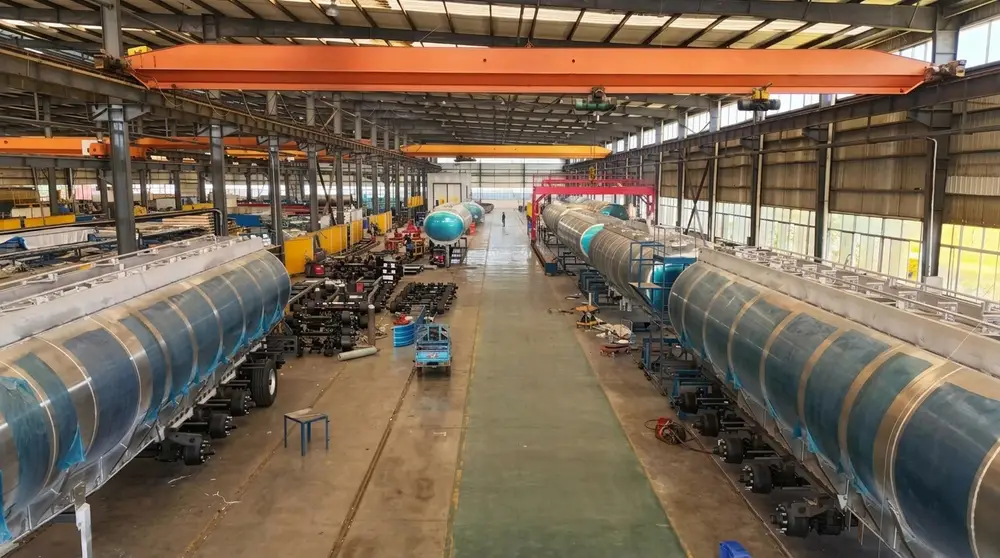
A customer in Uzbekistan once asked us to build a sulfuric acid tanker using the same carbon steel shell we use for diesel. We talked him out of it. Six weeks of concentrated sulfuric acid in a carbon steel tank, and he'd have been looking at pinholes in the walls and a hazmat cleanup.
That conversation happens more often than you'd think. The liquid inside a tank semitrailer dictates every material choice — the shell, the lining, the seals, the pump internals, even the metering equipment at the discharge end. Get one of those wrong and you're dealing with corrosion, contaminated cargo, or a failed safety inspection.
We build tank trailers for half a dozen liquid categories at our Liangshan factory. Here's what goes into each one.
Petroleum and Oil Products
Diesel, gasoline, kerosene, lubricating oils — these make up the bulk of our tank trailer production. We spec Q345B carbon steel for the tank body, either 4mm or 6mm wall thickness depending on volume and compartment layout. A 40,000-liter trailer carrying diesel at standard road pressure gets 6mm walls. Smaller tanks or single-compartment units can run 4mm.
The tank cross-section is oval or circular. Oval sections sit lower on the chassis, which keeps the center of gravity down — important when you're hauling 35 tonnes of sloshing liquid at highway speed. A single tank can hold 1 to 4 separate compartments divided by internal bulkheads, so one trailer can deliver diesel and gasoline on the same run without mixing them.
Some petroleum products need heat to stay liquid. Asphalt, heavy fuel oil, and certain lubricants thicken or solidify below 60-80°C. For these, we wrap the tank in steam coils or electric heating elements and cover everything with insulation. The driver maintains cargo temperature throughout the trip, and the product flows freely at the delivery point. Our stainless steel keep-warm tanker is built specifically for these applications.
For standard petroleum transport, we offer carbon steel oil tankers in 30,000L to 50,000L capacities and aluminum fuel tankers for operators who need to save tare weight.
Alcohol and Chemical Liquids
Ethanol, methanol, formaldehyde, organic solvents — these attack ordinary carbon steel. We had a methanol tanker come back from a fleet in Kazakhstan after two years with visible pitting inside the shell. The operator had ordered a carbon steel build to save money. He ended up spending more on the replacement than a stainless steel tank would have cost upfront.
For alcohol and chemical service, we use 304 or 316L stainless steel at 4mm to 5mm wall thickness. Stainless resists the corrosive action of these compounds and holds up over years of repeated loading and cleaning cycles. The inside surface gets polished to a smooth finish — not for looks, but because chemical residue sticks to rough surfaces. A polished interior cleans out faster between loads and reduces cross-contamination risk when the tank switches between different chemicals.
Acids and Alkali Solutions
Concentrated hydrochloric acid and sulfuric acid are the most aggressive liquids we build tanks for. Even 316L stainless steel corrodes under prolonged exposure to concentrated mineral acids — it just takes longer than carbon steel.
The solution is a composite construction: a structural steel outer shell for mechanical strength, lined with 12mm to 22mm of high-density polyethylene (HDPE) or polypropylene on the inside. The plastic layer does all the chemical work. The steel layer handles the road loads. Lining thickness scales with acid concentration — 30% hydrochloric acid might run 16mm, while a tank for concentrated sulfuric acid at 98% gets the full 22mm.
Every component that touches the liquid has to match. Standard rubber gaskets dissolve in strong acids within days. We use PTFE or fluoroelastomer seals on all valve connections and fittings. Miss one gasket, and you've got a leak.
Alkali solutions (caustic soda, potassium hydroxide) follow similar rules, though they're somewhat less aggressive than mineral acids. The same HDPE-lined construction works for most alkali concentrations.
Edible Oils and Food-Grade Liquids
Cooking oil, palm oil, soybean oil, and other food-grade liquids need a completely different approach. The tank material itself might be the same 304 stainless steel used for chemicals, but everything about the finish and fittings changes.
Food-grade tanks get mirror-polished interior surfaces — typically Ra 0.8 or better — to prevent oil from building up in micro-grooves. All welds are ground smooth and polished flush with the tank wall. Sanitary fittings replace industrial valves. There's no exposed threading where old product can hide and go rancid.
We also spec food-grade silicone gaskets instead of industrial rubber, and dedicated food-safe metering devices at the discharge point. These meters use materials approved for food contact and provide the measurement accuracy that commercial oil buyers require for their accounting.
Cross-contamination is the biggest risk. A tank that previously carried diesel cannot be cleaned well enough for food use — trace hydrocarbons absorb into surface imperfections. Food-grade tankers are built and dedicated for food service from day one.
Water and Brine Transport
Water tankers are simpler in material terms — no exotic linings needed — but they have their own requirements. Potable water tanks use food-grade coatings or stainless steel interiors to prevent contamination. Industrial water and brine (salt water for road de-icing or industrial processes) run in carbon steel tanks, sometimes with an epoxy interior coating to slow corrosion from the salt content.
The pump and piping differ too. Water's low viscosity means high-flow centrifugal pumps work well, but brine is abrasive to standard pump seals. Brine tankers get upgraded seals and sometimes stainless steel pump housings to handle the salt.
Quick Reference: Liquid Category vs. Tank Specification
| Liquid | Tank Material | Wall Thickness | Lining | Pump Type |
|---|---|---|---|---|
| Diesel, gasoline, kerosene | Q345B carbon steel | 4-6mm | None | Centrifugal |
| Asphalt, heavy fuel oil | Carbon steel + heating | 6mm | None (insulated) | Gear |
| Ethanol, methanol, solvents | 304/316L stainless steel | 4-5mm | None | Stainless steel |
| Hydrochloric acid, sulfuric acid | Steel shell + HDPE/PP lining | 12-22mm lining | HDPE or polypropylene | Stainless steel (chemical-grade) |
| Caustic soda, alkali solutions | Steel shell + HDPE lining | 12-18mm lining | HDPE | Stainless steel |
| Cooking oil, palm oil | 304 stainless steel (polished) | 4-5mm | None (mirror finish) | Stainless steel (food-grade) |
| Potable water | Stainless steel or coated carbon steel | 4-6mm | Food-grade coating | Centrifugal |
| Brine, salt water | Carbon steel + epoxy coating | 4-6mm | Epoxy | Centrifugal (upgraded seals) |
Safety: Baffles and Pressure Testing
Every tank semitrailer we build — regardless of the liquid — gets internal wave-proof baffles. These welded plates break up liquid surge during braking and turns. Without them, 40 tonnes of fuel slamming forward under hard braking shifts the center of gravity and extends stopping distance dramatically. On a curve, the surge can tip the trailer.
We space the baffles based on tank length and liquid density. Heavier liquids like acids generate more surge force, so the baffles are closer together. Each baffle plate has calculated openings that let liquid flow through slowly during normal driving but block the full force of a sudden surge.
After welding, every tank goes through high-pressure gas leak detection. We pressurize the tank and check every weld seam, fitting, and valve connection. A tank carrying hydrochloric acid or gasoline has zero tolerance for leaks — even a pinhole creates a safety and environmental incident. The testing protocol follows applicable transport vessel standards for road tanker construction.
For more on ongoing tank maintenance after delivery, see our semi-trailer maintenance guide.
Pumps and Metering Equipment
The pump moves liquid in and out. The wrong pump for the liquid means slow loading, premature seal failure, or contamination.
- Centrifugal pumps handle petroleum and water well. High flow rate, fast suction, simple design. We spec these on most diesel tankers.
- Gear pumps are the right choice for viscous products — asphalt, heavy oils, lubricants. The positive-displacement action maintains flow rate regardless of viscosity, where a centrifugal pump would stall.
- Stainless steel chemical pumps go on acid and chemical tankers. Every wetted part — impeller, casing, seals — is made from chemically resistant material.
On the metering side, fuel tankers can be fitted with single-count or double-count flow meters. For direct delivery operations (fuel to gas stations, oil to processors), we can add tax-controlled computer refueling machines that log each transaction, 10-15 meter automatic retractable hose reels, and standard dispensing nozzles. Edible oil tankers get dedicated food-grade metering devices with food-contact-approved materials.
How to Choose the Right Tank Trailer
Match the tank to three things: the liquid, the operating environment, and the discharge method.
If you're hauling petroleum on paved highways — the most common scenario — a carbon steel tank with centrifugal pump and flow meter covers it. That's 70-80% of the tank trailers on the road. Our fuel tank trailer buying guide walks through the commercial details of that decision.
For chemical or acid service, the stakes are higher and the spec has to be exact. Tell us the liquid name, concentration, and temperature range, and we'll spec the shell material, lining, seals, and pump to match.
If you're not sure where to start, contact our team with the liquid type, required volume, and operating conditions. We've built tanks for everything from palm oil in Nigeria to hydrochloric acid in Central Asia, and we can match the configuration to your specific cargo.
For general trailer selection guidance, see our post on how to choose the right semi trailer.
Frequently Asked Questions
Can one tank trailer carry different liquids at different times?
It depends on the liquids. A diesel tanker can switch between diesel and gasoline with a standard cleaning procedure. But a tank that carried chemicals cannot safely carry food-grade liquids — trace residues absorb into surface imperfections and cannot be fully cleaned out. Acid-lined tanks are dedicated to acid service. As a rule, the more aggressive the liquid, the more restricted the tank's future use.
What certifications do tank semitrailers need?
Requirements vary by country and liquid classification. Hazardous liquid tankers (acids, flammable chemicals) typically need ADR certification in regions following European transport regulations, or equivalent national certifications. Petroleum tankers must comply with local road transport standards. We build to the specifications required for the destination country and can provide the relevant documentation.
How many compartments can a tank trailer have?
Most petroleum tankers run 1 to 4 compartments. We've built tanks with up to 6 compartments for operators who deliver multiple fuel grades on a single route. Each compartment is fully isolated by welded bulkheads with independent loading and discharge points. More compartments mean smaller individual volumes, so there's a practical trade-off based on your delivery pattern.
How long does a tank semitrailer last?
With proper maintenance, 10-15 years for petroleum tankers and 8-12 years for chemical and acid tankers (the corrosive environment shortens service life even with proper lining). The tank body is usually what determines end-of-life — running gear, axles, and suspension can be replaced along the way. Regular inspection of welds, lining integrity, and valve seals is essential. See our maintenance guide for the full schedule.
Continue Reading
May 9, 2026
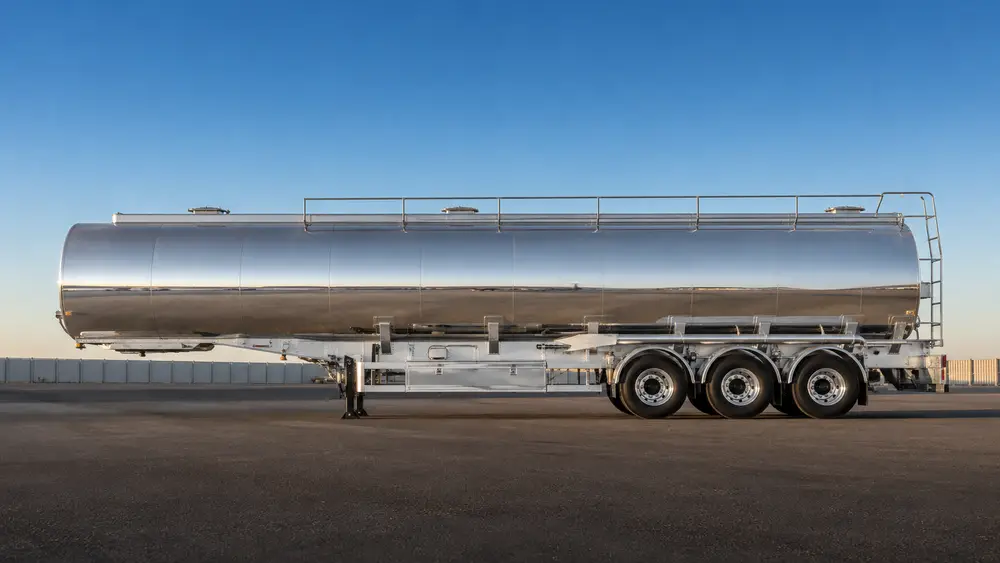
How Much Does a Tank Trailer Hold? A Manufacturer's Capacity Guide for Fuel, Water, Milk, Chemical, and LPG
Tank trailer capacity ranges 5,500 to 11,600 US gallons or 21,000 to 44,000 liters. HUAYU explains capacity by cargo, DOT class, ullage, and region.
May 7, 2026
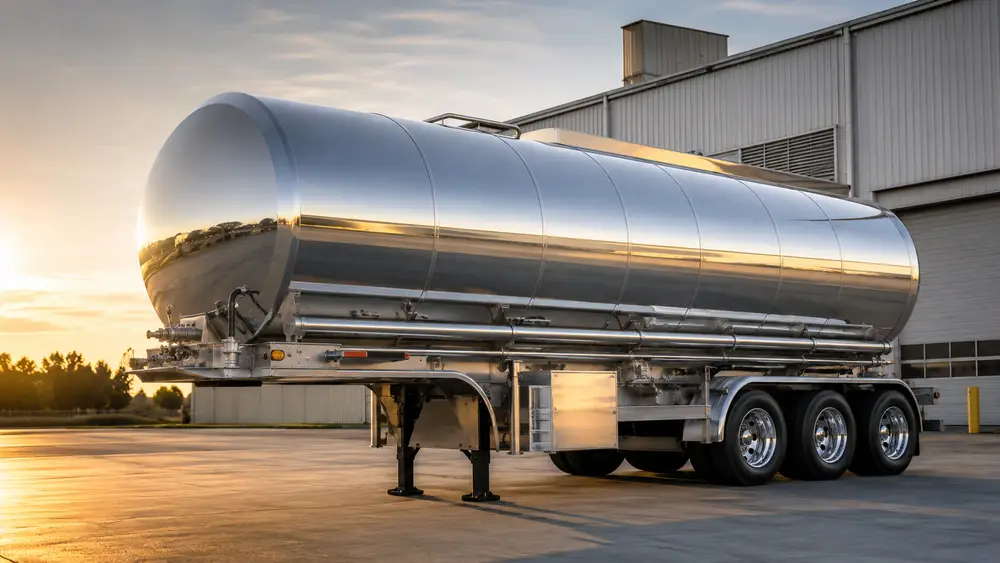
How Does a Tanker Trailer Work? A Manufacturer's Mechanical Walkthrough
How does a tanker trailer work? A factory engineer walks through baffles, bottom valves, vapor recovery, pumps, and the surge physics that makes tankers tip over.