55 CBM ADR Fuel Tanker Built for Saudi Arabia and Africa
25 engineers · ISO 9001 · 3C certified · Liangshan factory since 2001
Updated 2026-04-05
55,000 Liter ADR Fuel Tanker for Saudi Arabia: Project Overview
A fuel distribution partner came to us with a straightforward brief: build a fleet of 55 CBM (55,000 liter) fuel tankers that could survive Saudi summer heat — where ground-level temperatures near the tank surface regularly push past 50 degrees Celsius — and then hold up on the rougher roads their drivers cover across sub-Saharan Africa. The spec sheet was specific: carbon steel, 4-axle configuration, ADR-certified, and built to run hard for years without major downtime.
We finished the batch, ran every inspection in our QC sequence, and the tankers are ready for shipment to Saudi Arabia.
| Detail | Value |
|---|---|
| Capacity | 55 CBM (55,000 liters) |
| Tank Material | 6mm carbon steel (Q235B) |
| Axles | 4 axles (FUWA brand) |
| Landing Gear | JOST |
| Discharge | 5 API valves |
| Certification | ADR Class 3 (33/1203) |
| Target Markets | Saudi Arabia, West / East / Southern Africa |
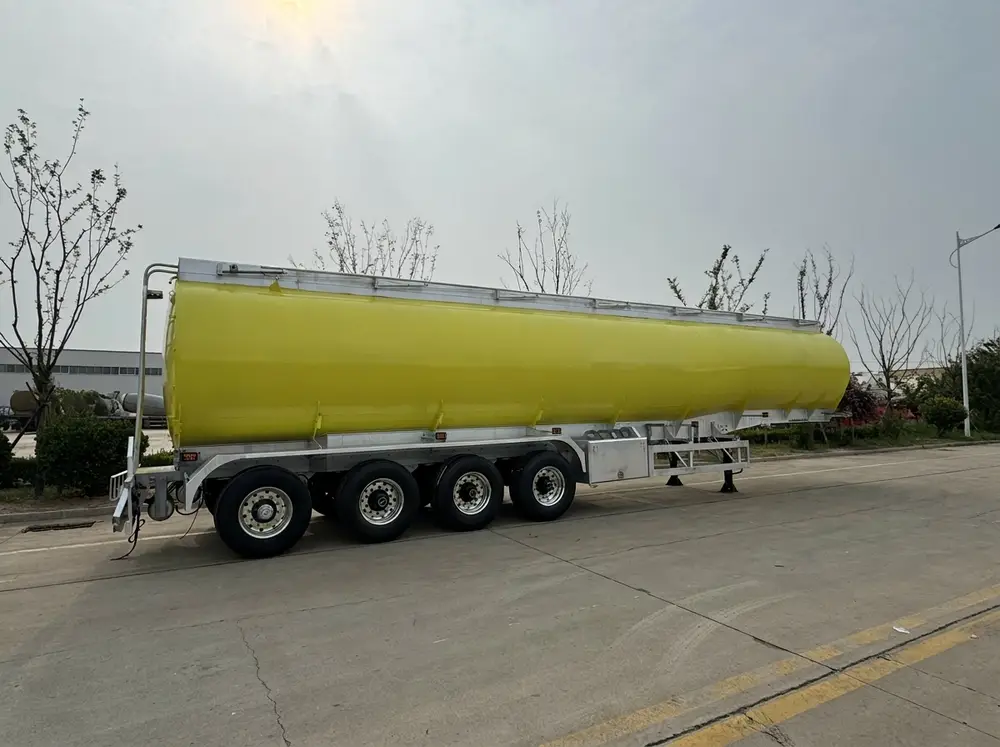
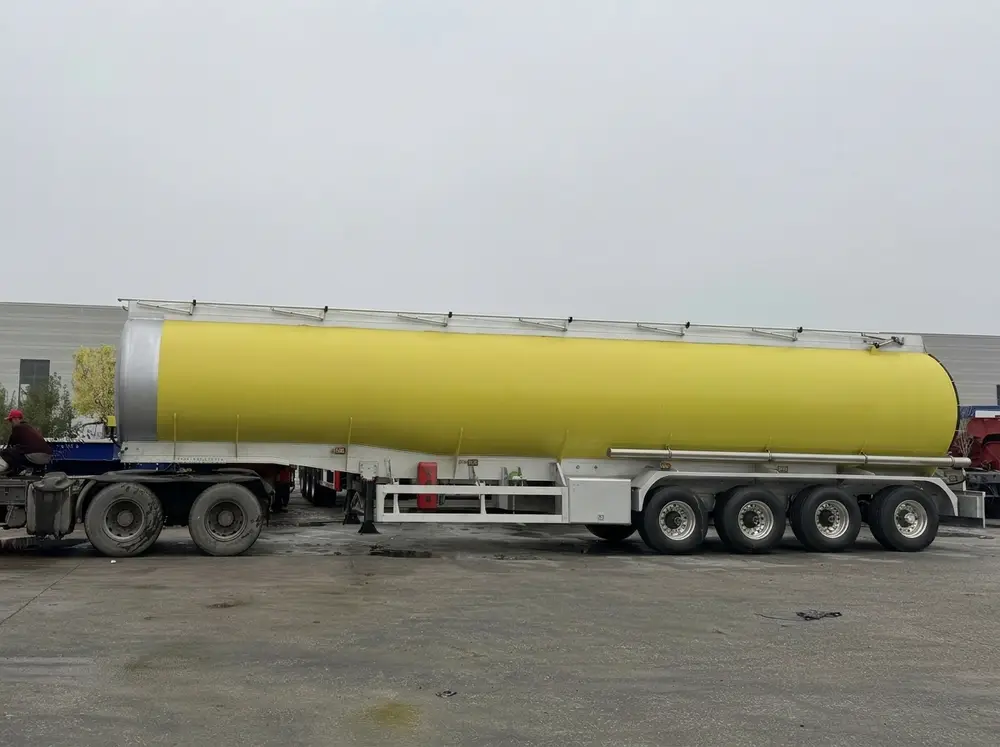 Completed 55 CBM fuel tanker — side profile showing 4-axle configuration and yellow-silver paint scheme
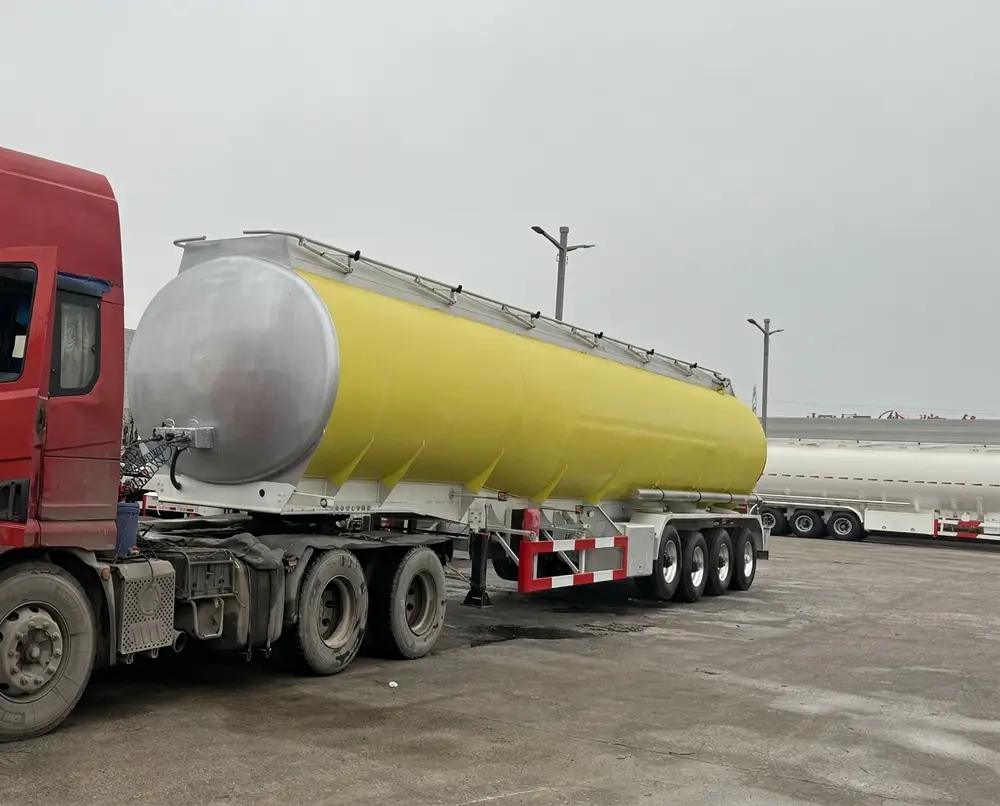 55 CBM fuel tanker coupled to tractor at HUAYU yard, prepared for delivery
55 CBM Fuel Tanker Specifications: Steel, Axles, and Discharge System
The 55 CBM tank body uses 6mm carbon steel plate — thicker than the 4mm option on our lighter-duty models. At 55,000 liters of fuel, the loaded weight is substantial, and those extra 2mm of wall thickness make a real difference in absorbing road vibration and minor impacts over years of daily service. Thinner walls develop fatigue cracks at weld seams faster, and that is not a risk worth taking on a tanker hauling gasoline.
Here is what went into this build:
- Capacity: 55 CBM (55,000 liters)
- Tank material: 6mm carbon steel (Q235B) — chosen over stainless or aluminum for repairability in African markets where any workshop with a MIG welder can patch carbon steel
- Axle configuration: 4 axles (FUWA brand) — spreads loaded weight across more axle lines, which keeps the tanker within Saudi road weight regulations and cuts tire wear on long-haul African routes
- Landing gear: JOST — widely available spare parts across the Middle East and Africa
- Discharge system: 5 API discharge valves — the standard fitting at fuel depots from Jeddah to Lagos, and faster to connect than ball valves
- Safety equipment: Anti-overflow device, emergency shut-off valve, grounding chain, anti-static strip, fire extinguisher mounts, and internal baffle plates to control liquid surge during braking
- Certification: ADR (Agreement concerning the International Carriage of Dangerous Goods by Road) — mandatory for fuel transport in Saudi Arabia and in most African countries that follow UN/ADR standards
The 4-axle carbon steel oil tanker is one of our higher-volume configurations for large-capacity orders. The fourth axle adds cost, but operators in markets with strict axle load limits — Saudi Arabia being one — need it to stay legal on the road. For operators handling multiple fuel types, our guide on what liquids tank semitrailers can transport covers the compatibility considerations.
Carbon Steel Tank Manufacturing: Welding, NDT, and Pressure Testing
The photos below show the 55 CBM tank body partway through production in our Liangshan workshop. At this stage, the steel plates have been rolled and welded into the main shell, and the blue protective film is still on.
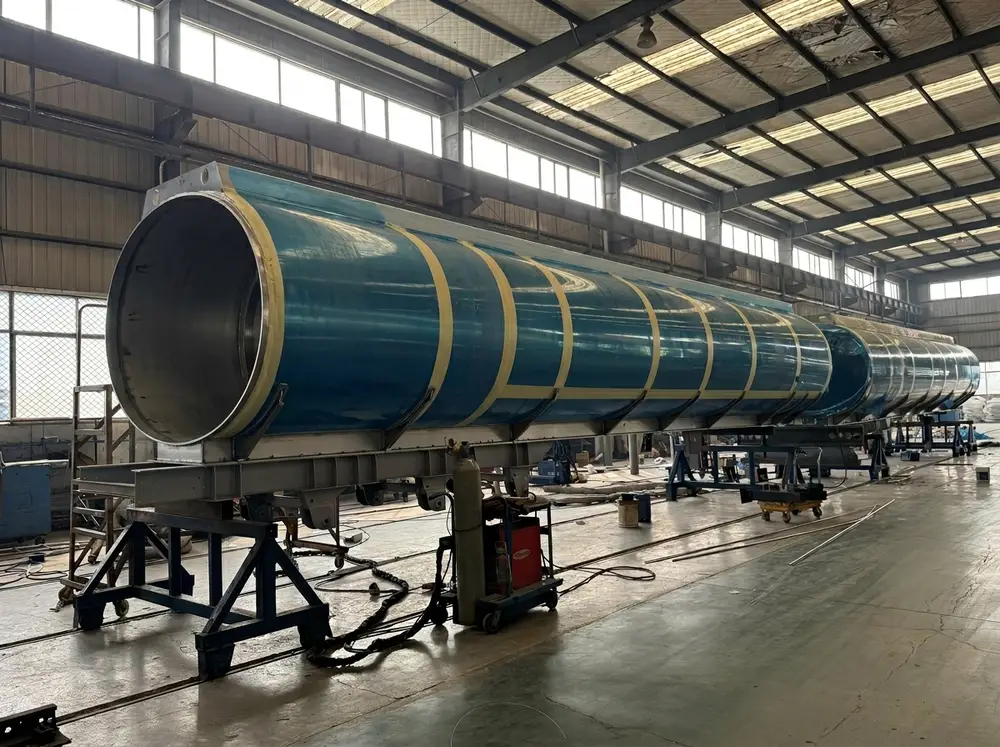 55 CBM tank body during manufacturing at HUAYU's Liangshan workshop — protective film still applied
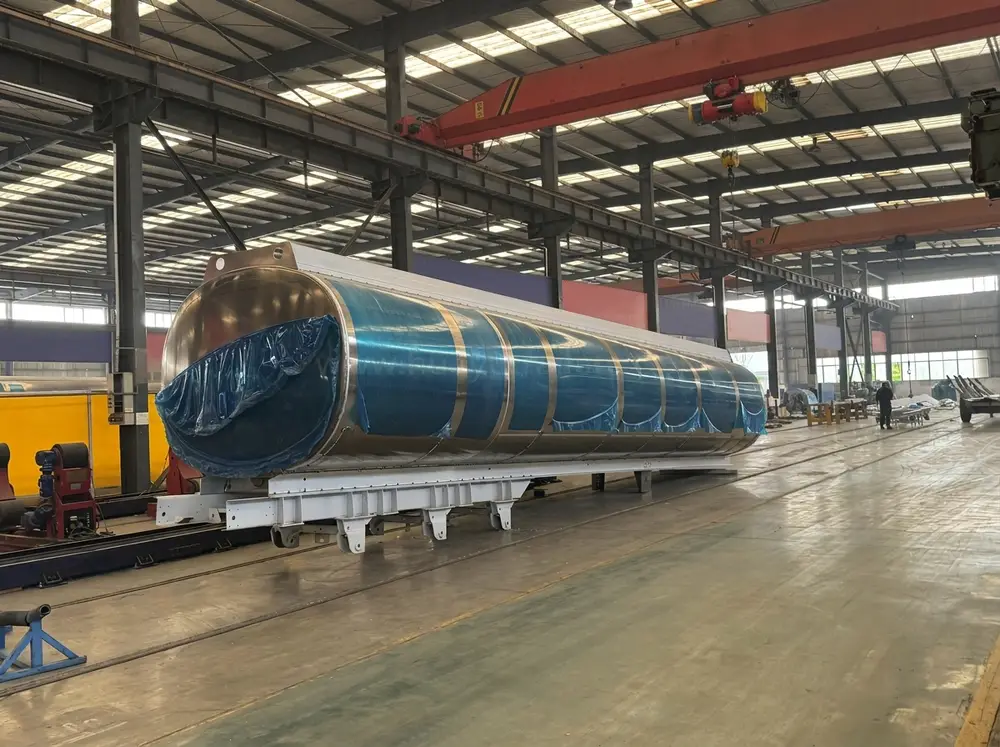 Tank body on the assembly frame before axle installation and piping
Every longitudinal and circumferential weld on the tank goes through automatic welding first, then manual grinding on the ring butt welds where the shell sections meet. Our QC team runs non-destructive testing (NDT) on the critical seams — this is where cracks or porosity would show up if the welding parameters were off. For a step-by-step breakdown of each inspection stage, see our oil tank semi-trailer quality inspections guide.
After assembly, each tanker goes through two pressure tests before it leaves the factory:
- Water pressure test at 0.036 MPa — confirms structural integrity under load
- Air tightness test at 0.36 KPa — verifies every seal, valve, and weld point holds without leaking
These are the same test standards we apply to every fuel tanker trailer we build. The test certificates ship with the tanker and are part of the documentation package the buyer needs for customs clearance and local registration in Saudi Arabia.
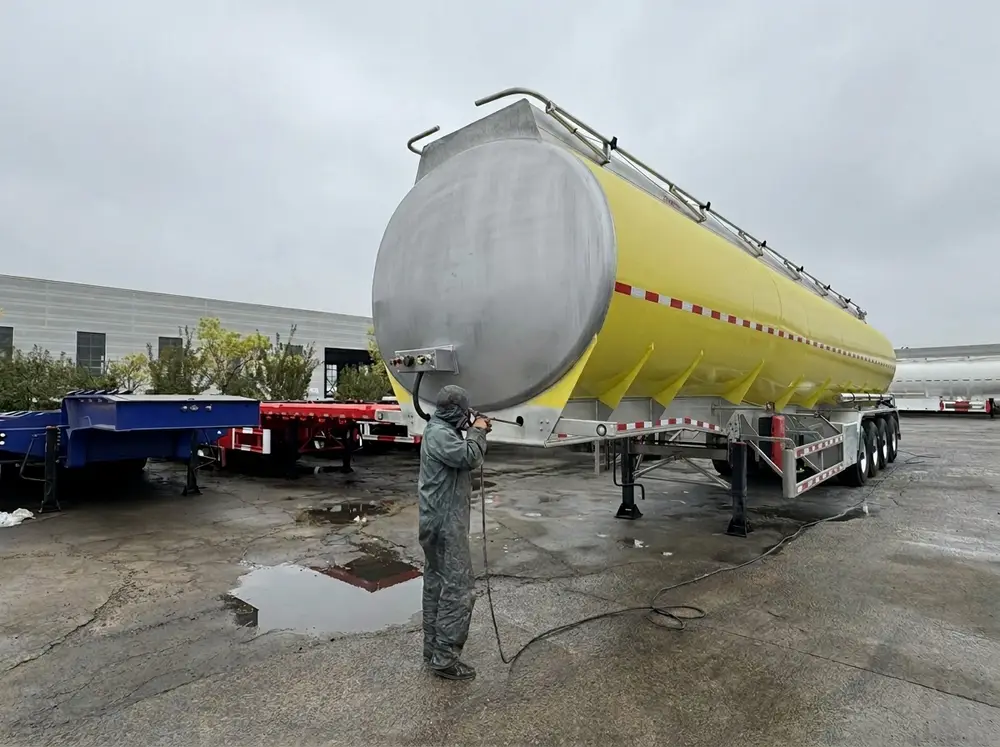 Final inspection — pressure washing and visual check before delivery
For a closer look at how our production line runs from raw steel plate to a finished tanker rolling out the door, see our factory production process overview.
ADR Compliance: What It Covers on This 55 CBM Tanker
ADR certification for fuel tankers is not a label — it is a set of engineering requirements baked into the design. Every tanker in this batch carries the full ADR marking set on the rear panel before delivery: the orange "33/1203" hazard identification plate (flammable liquid — gasoline/petrol), the Class 3 flammable liquid diamond, and the operator's company identification. These markings are mandatory and must be legible from a set distance under ADR regulations.
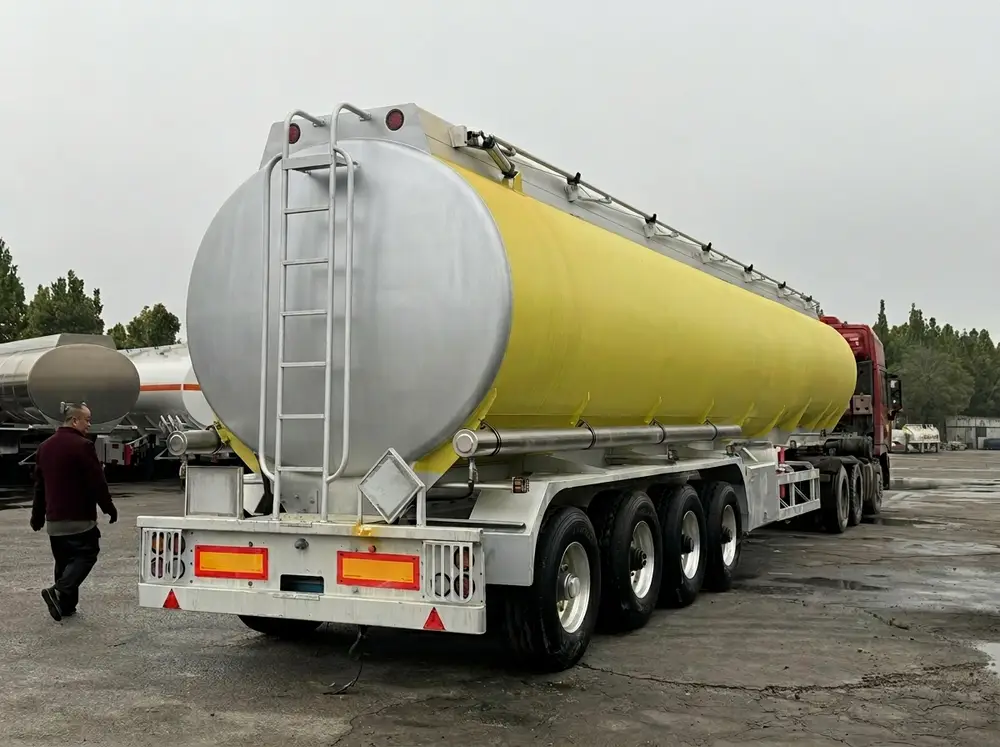 Rear view of 55 CBM fuel tanker showing 4-axle chassis, rear lights, ladder access, and reflective safety markers
But the certification goes well beyond placards. It requires the tank to pass design and construction standards for carrying dangerous goods — wall thickness minimums, pressure relief valve sizing, emergency shutoff response time, and compartment baffle requirements all have to meet specific thresholds. We designed the 55 CBM shell, valve layout, and baffle spacing around ADR from the start. It was not bolted on at the end.
Why Carbon Steel Fuel Tankers Suit Middle East and African Roads
Whether it is running on a smooth Saudi expressway at 50 degrees or bouncing down an unpaved road in West Africa, the tanker has to do three things: carry volume, survive abuse, and be fixable with parts a local mechanic can find.
For Saudi Arabia, carbon steel handles the daily thermal cycling — scorching days, cooler nights — better than some lighter alloys at this capacity. The 4-axle setup keeps the tanker within Saudi axle load regulations even when fully loaded at 55,000 liters. And ADR approval is simply the price of entry — without it, the tanker cannot legally operate on Saudi roads carrying fuel.
For African markets, the calculation is different but lands in the same place. Six-millimeter carbon steel walls are more forgiving on rough roads than thinner alternatives. When damage does happen — and it will, on some of these routes — any workshop with basic welding equipment can repair carbon steel. Aluminum repairs need specialized TIG welding that is hard to find outside major cities like Lagos, Nairobi, or Dar es Salaam. The baffle plates inside the tank also matter more here: they control fuel surge during hard braking on unpaved roads, which directly affects stability when the tank is only partially loaded. And the API discharge valves we fitted are the standard connection type at fuel depots across Nigeria, Tanzania, Kenya, and Ghana — where HUAYU tankers are already in daily service.
We chose FUWA axles and JOST landing gear for this batch specifically because both brands have established spare parts networks in African and Middle Eastern cities. When a driver needs a replacement part in Riyadh or Mombasa, it should be on a shelf somewhere — not on a 6-week back-order from Europe.
This is not the first project we have done with partners operating across Saudi Arabia and Africa. Our recent cooperation with Tanzanian and Saudi partners covered similar ground — tanker specs, component choices, and the QC walkthrough that buyers want to see before placing large orders.
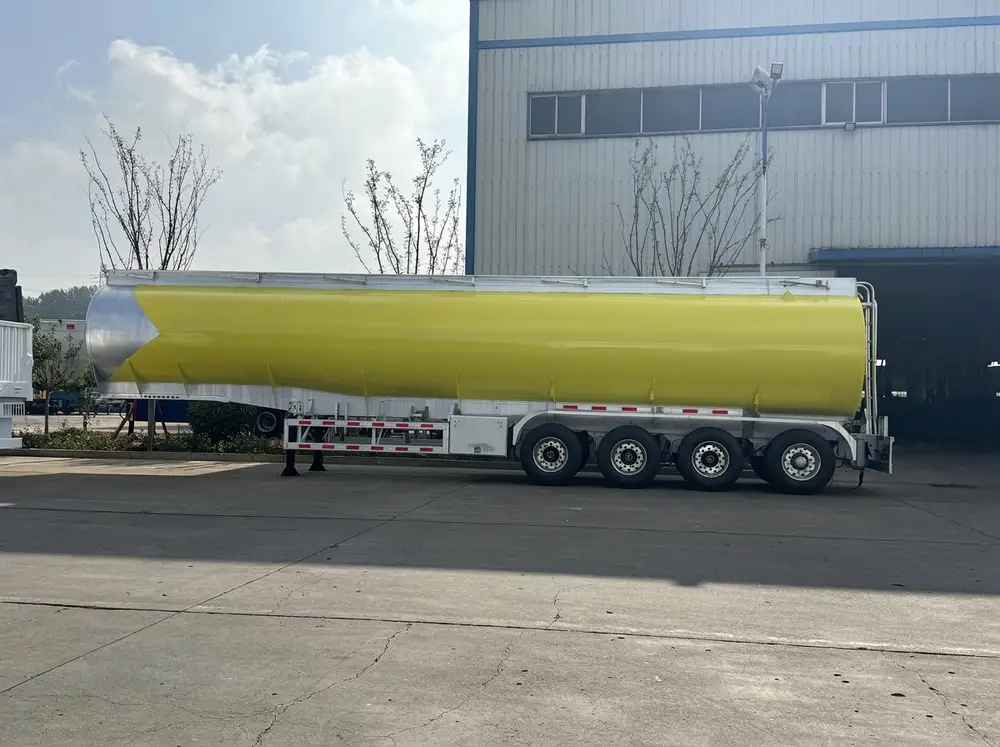 55 CBM fuel tanker in front of HUAYU factory — ready for shipment
Get a Quote for 55 CBM Fuel Tankers
If you are sourcing large-capacity fuel tankers for the Middle East, Africa, or other international markets, contact our sales team to discuss specifications, ADR certification, pricing, and delivery timelines. We build carbon steel, aluminum, and stainless steel tankers from 20,000L to 90,000L — configured to match your local road regulations and depot infrastructure.
New to buying fuel tankers from China? Our guide on how to buy a fuel tank trailer walks through the full process from specs to shipping.